

Keeping a residential home design budget on track starts well before the final drawings are complete. For many homeowners, the fear of "scope creep" and financial surprises is the most stressful part of the process. Clear expectations, early planning, and transparent conversations help prevent these blowouts.
While architects can guide you with cost-aware design options, early figures are estimates based on industry averages, not fixed pricing. Accurate numbers only appear once builders or a Quantity Surveyor (QS) provide formal costings. We can outline costs based on experience and comparable projects, but this does not replace personalised financial advice.
It is why Invilla's architectural design service pairs every concept with an honest cost conversation before the drawings advance.
Uncovering the Hidden Costs of Building a House
Residential home design costs are rarely a simple calculation. Many homeowners get caught out by the hidden costs of building a house because they only look at the base price of the build. Your final budget will shift significantly depending on several key factors:
- Site Conditions: A flat, easily accessible block will always be cheaper to build on than a steep, downward-sloping block that requires extensive earthworks, retaining walls, and complex drainage. If you are planning a knock down rebuild in Brisbane, you also need to factor in demolition, site preparation, and upgrading old services.
- Construction Complexity: Cantilevered upper floors, curved walls, and complex rooflines require more structural engineering and steel, which heavily drives up costs.
- Material Selections: The difference between standard brick veneer and high-end architectural cladding is significant.
- Pre-Construction Fees: Many homeowners forget to budget for the red tape before a shovel even hits the dirt. This includes soil testing, structural engineering reports, surveying, and council DA (Development Approval) fees.
How Different Spaces Impact Your Budget
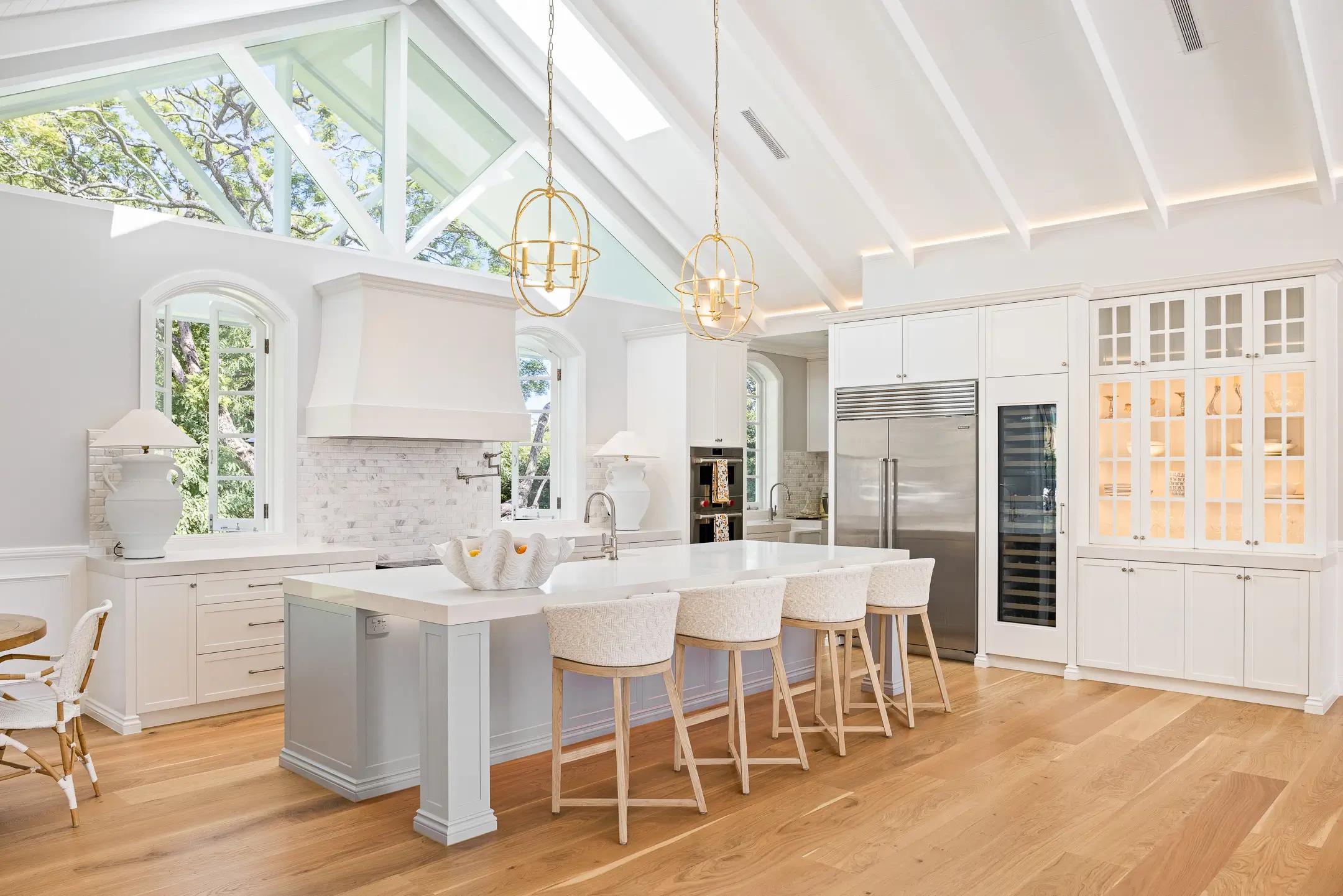
Some rooms naturally cost more to build than others. Kitchens, bathrooms, and laundries generally sit at the top end due to plumbing, waterproofing, custom cabinetry, and tiling.
Living areas, bedrooms, and study zones tend to be more cost-effective. Understanding these differences early helps you allocate the budget where it creates the biggest impact. These variations do not limit design freedom; they simply help you make informed decisions about where to invest and where to simplify.
How Your Design Brief Shapes the Budget
A clear brief is one of the most powerful budgeting tools you have. It helps define what the home needs to include, how big it truly needs to be, and where priorities sit to avoid scope creep.
Early in the process, architects use average building costs per square metre to provide indicative estimates. While these are not final fixed numbers, they help guide your decisions before plans are fully developed. As the design progresses, site investigations, engineering input, and more detailed drawings produce tighter cost estimates that reflect your vision more accurately.
Managing Budget Expectations Throughout the Process
Residential home design rarely follows a straight line. Preferences evolve, materials shift in price, and new ideas emerge. Managing your budget is about staying flexible while keeping sight of your priorities.
At Invilla, our Cost Analysis Plan provides clear breakdowns across construction, finishes, landscaping, and contingencies, giving clients a realistic view of where the budget is sitting at each stage. When conversations are honest and updates are regular, budgeting becomes less stressful and more strategic.
Ready to Bring Your Ideas to Life?
Designing a home on a clear, well-managed budget isn't about cutting back, it is about making informed decisions that support your lifestyle and long-term goals. Whether you are beginning a new build or exploring options for a complex site, Invilla can help you balance thoughtful design with smart budgeting.
Book a design consultation with Invilla Architecture today.