

Stand in a well-designed Brisbane home on a February afternoon and you notice what isn't there. No glare across the floor, no heat radiating off the glass, no stale air pooling in the hallway. A breeze moves from one side of the house to the other, the eaves keep the high sun off the walls, and the rooms stay comfortable well into the evening. None of that comes from a machine. It comes from passive design.
Passive design sits at the heart of sustainable house design, and in Brisbane it has a character of its own. This guide covers the passive design principles we use on Brisbane homes, from where the house sits on its block to how its ceilings are shaped, and how each one applies to new homes and major renovations alike.
What Is Passive Design?
Passive design is the approach of planning a home so it stays comfortable using the climate itself, with little or no mechanical heating or cooling. It relies on orientation, shading, ventilation, insulation and the careful use of materials. Because it is built into the layout and form of the home, it keeps working every day at no running cost.
Why Passive Design Looks Different in Brisbane
Brisbane sits in climate zone 2 on the climate zone map, a zone defined by warm, humid summers and mild winters. That shapes every passive design decision. Where a home in Hobart is designed to gather and hold heat, a Brisbane home is designed first to keep the summer sun off, let the breeze through and manage humidity, while still welcoming the low winter sun into its living areas.
It also means the most comfortable Brisbane homes tend to feel open and light rather than sealed and heavy: deep eaves, wide openings, rooms that breathe. Many of these ideas are as old as the city's first timber homes, and they work just as well in a contemporary custom home. We explore that thread further in our piece on how climate shapes residential architecture in Brisbane.
Orientation and Passive Solar Design
Orientation is one of the biggest decisions in passive design, and it is made before a single wall is drawn. In Brisbane, the north is where living areas want to be. The summer sun passes high overhead, so a well-sized eave keeps it off north-facing glass, while the low winter sun slips underneath and warms the room. That is passive solar design in its simplest form: let the sun in when you want it, and keep it out when you don't.
The west is the side that benefits most from protection, because the late afternoon sun arrives low, hot and hard to shade. Garages, laundries, bathrooms and stairs make natural buffers on the western side, with living spaces turned away from it. East-facing rooms enjoy gentle morning light, which suits bedrooms, kitchens and breakfast spaces, while the south offers soft, even light with little direct sun.
| Orientation | What the sun does in Brisbane | What suits this side | How to shade it |
|---|---|---|---|
| North | High in summer, low in winter | Living and dining areas | Eaves or horizontal shading sized to block summer sun and admit winter sun |
| East | Gentle morning sun | Bedrooms, kitchens and breakfast spaces | Moderate eaves, planting or adjustable screens |
| West | Low, hot afternoon sun | Garages, laundries, bathrooms and stairs | Vertical screens, battens, planting and modest glazing |
| South | Little direct sun, soft even light | Studies, media rooms and service spaces | Little shading needed |
Not every block faces the ideal way, and that is where good design earns its place. On a narrow block or a sloping site, courtyards, clerestory windows and split levels can bring northern light and breezes into rooms that would otherwise miss them.
Shading That Works With the Seasons
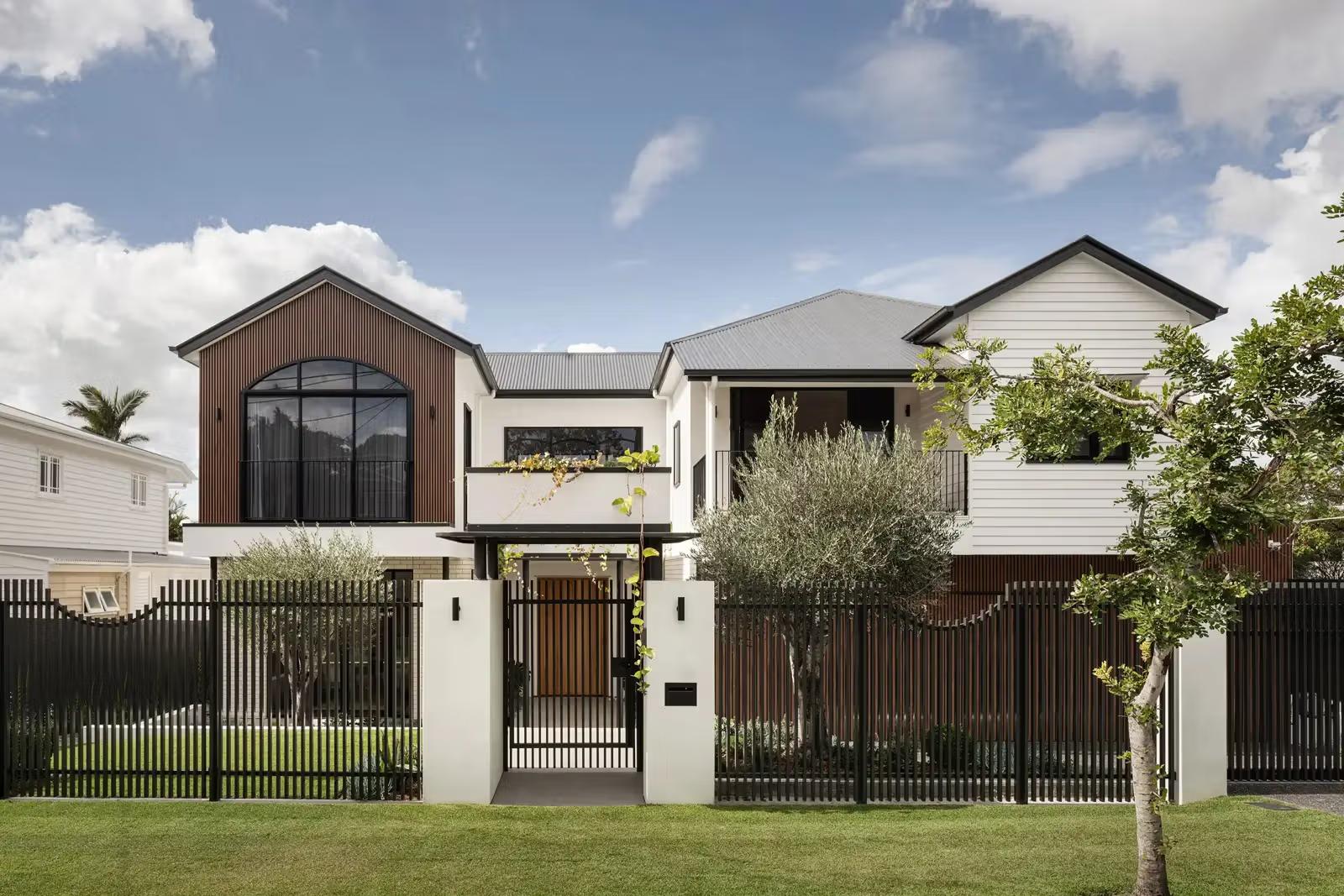
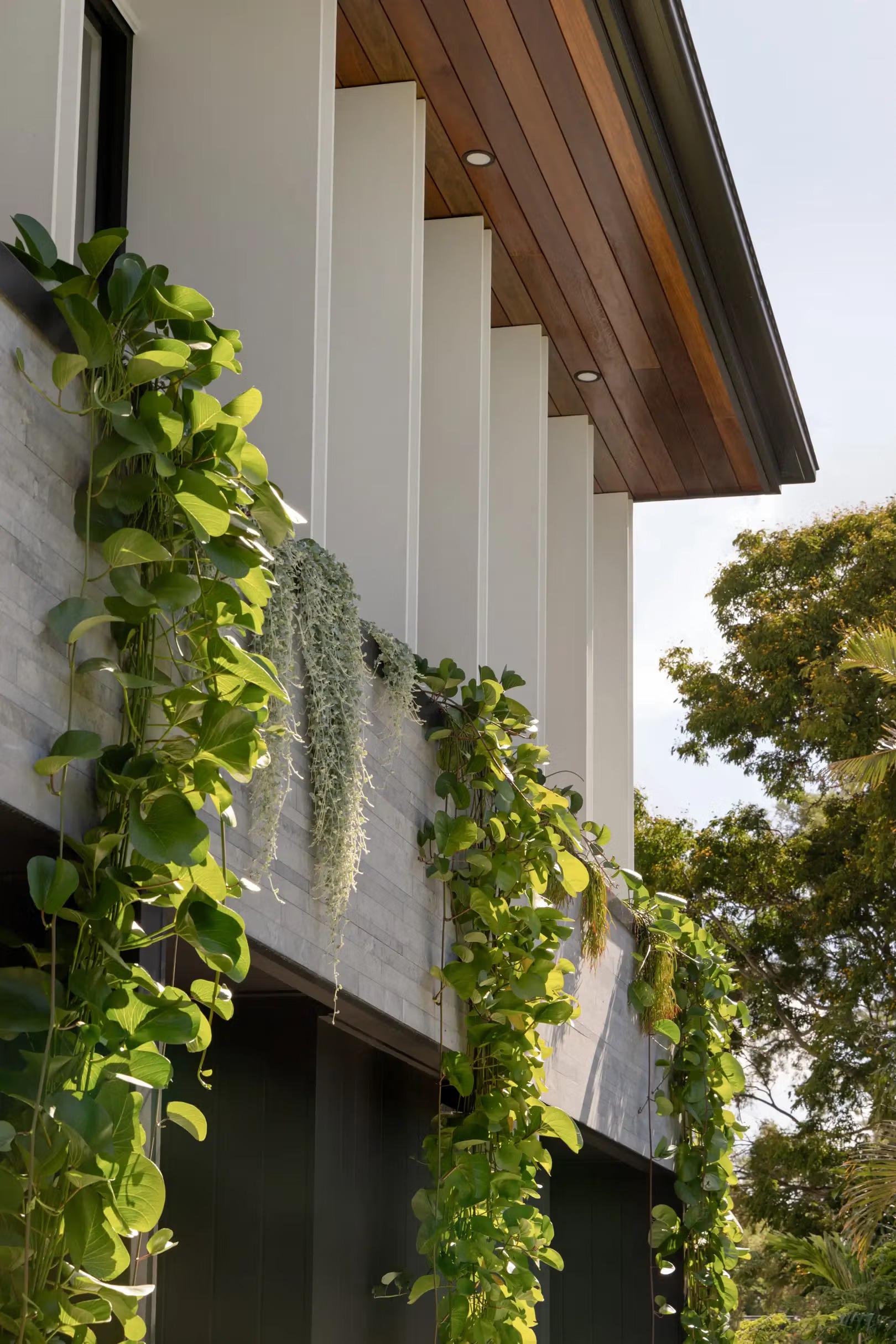
Shade is a Brisbane home's first response to summer, and it works best on the outside of the building, stopping heat before it reaches the glass. Deep eaves, verandahs and pergolas handle the high summer sun on the north. Battens, external screens and planting handle the low sun from the east and west, where a horizontal eave alone can't reach.
Good shading is also part of how a home looks. Generous eaves give a Brisbane house its shadow lines, a verandah becomes an outdoor room, and a screen of timber battens can add privacy and texture as well as shade. Designed together, the shading and the architecture become the same thing.
Passive Cooling: Designing for the Breeze
Air movement is how a Brisbane home stays comfortable through humid summer nights, and it starts with the plan. Cross-ventilation needs openings on opposite sides of a room, ideally facing the prevailing north-easterly summer breezes, with a clear path for air to travel through. Rooms that are one room deep, breezeways between wings and internal doors with high-level openings all help that air keep moving.
Warm air rises, so the ceiling plays its part too. Raked ceilings and high-level windows let heat escape at the top of a room while cooler air is drawn in below, a process known as stack ventilation. Clerestory windows do double duty here, lifting warm air out and bringing daylight in.
Window type matters as much as window size. Casement and louvre windows open fully and can be angled to catch the breeze, which makes them natural choices for the rooms that need it most, and raising living areas off the ground lets air circulate beneath the floor. Ceiling fans complete the picture, using far less energy than air conditioning to make still air feel cooler.
Insulation, Glazing and Thermal Mass
In Brisbane, much of a home's unwanted summer heat arrives through the roof and the glass, so that is where insulation and glazing work hardest. A well-insulated roof with a reflective layer beneath the roof sheeting stops radiant heat before it reaches the ceiling, and lighter roof colours reflect more of the sun in the first place. Glazing is sized and specified to suit each orientation, with higher-performance glass where the sun is hardest to control. We design our homes to meet the National Construction Code energy efficiency requirements and see them as a starting point.
Thermal mass, such as a concrete slab or masonry wall, absorbs heat and releases it slowly. In Brisbane it is a tool to use with care. It works well where it is shaded from the summer sun but can catch the winter sun, such as a slab beneath a north-facing living room with deep eaves, and where night breezes can carry its stored heat away. Bedrooms and upper levels that need to cool quickly at night often suit lighter construction.
Daylight Without the Heat
A well-planned home uses daylight from morning to evening without inviting the sun's heat in with it. High-set and clerestory windows bring light deep into the plan, light-coloured surfaces carry it further, and carefully placed skylights can light a hallway or bathroom without adding glare. The aim is soft, even light in every room, with the heat kept outside.
What the Queenslander Teaches Us
Brisbane's original homes were passive designs long before the term existed. The Queenslander was raised on stumps so air could move beneath the floor, wrapped in verandahs that shaded its walls, finished with high ceilings that let warm air rise, and fitted with casement windows, breezeways and fretwork panels that kept air moving between rooms.
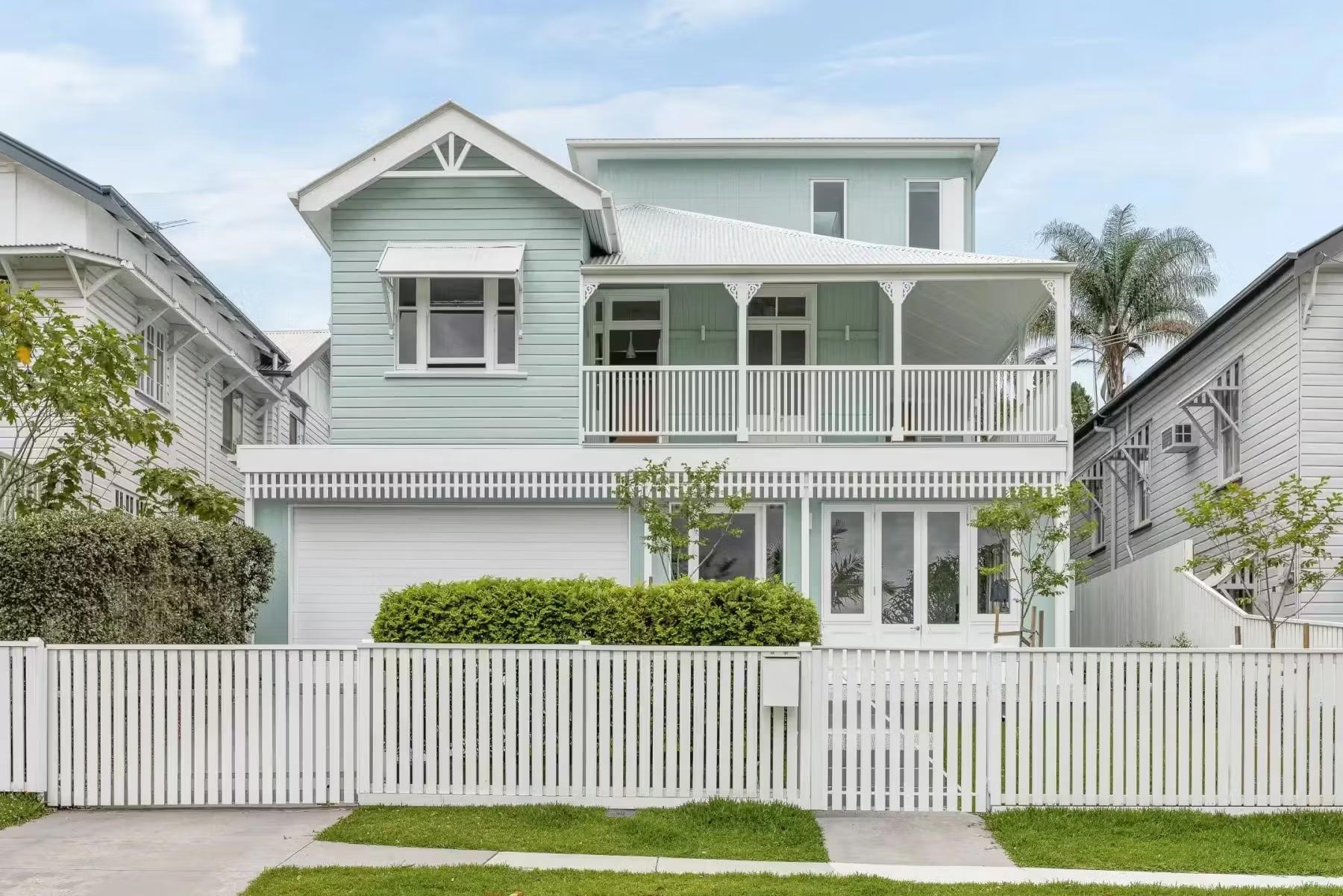
The same ideas shape the custom homes and renovations we design today, in contemporary forms: deep eaves and outdoor rooms doing the work of the wraparound verandah, high-level windows doing the work of fretwork, and open plans that let the breeze run the length of the house.
Bringing Passive Design Into a Renovation
Passive design is easiest to build in from the start, but a major renovation or extension is one of the best opportunities to bring it into an existing home. Reworking the plan can move living areas to the north, open a path for cross-ventilation, or add eaves, a verandah or an outdoor room where the sun needs managing. Roofs and walls opened up during the works can be properly insulated, and new glazing can be sized and placed for the orientation rather than inherited from the original house.
For character homes, these changes can sit comfortably alongside the original fabric, which we cover in our guide to renovating a Queenslander.
Passive Design in Practice
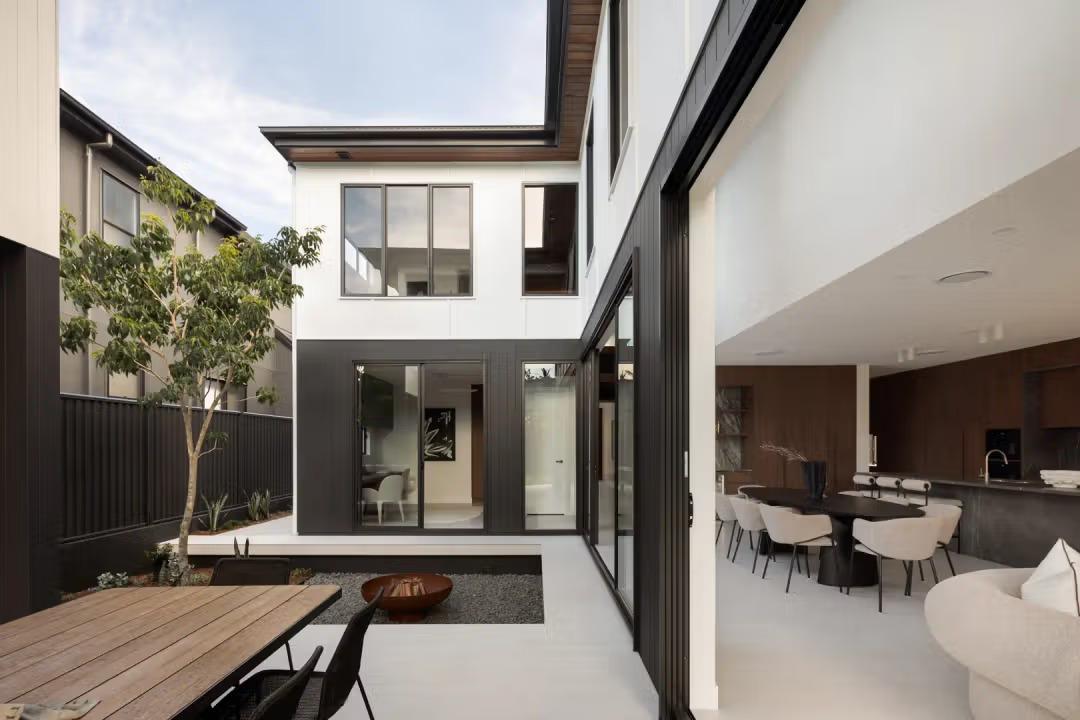
Akala House in Camp Hill was shaped by passive design principles. Double-height voids and a gallery walkway draw daylight into the centre of the home and give warm air room to rise, while the ground-floor living, dining and kitchen open onto a courtyard through full-height sliding doors, turning it into an outdoor room. Timber eaves, spotted gum detailing and hanging gardens soften the facade, so the passive moves read as part of the architecture rather than an addition to it.
Passive Design Questions, Answered
What Are the Principles of Passive Design?
The core principles of passive design are orientation, shading, ventilation, insulation, glazing and thermal mass. In Brisbane, shading and ventilation carry the most weight, because the climate's main challenge is summer heat and humidity rather than winter cold.
Is Passive Design the Same as a Passive House?
No. Passive House, or Passivhaus, is a specific international certification standard with strict targets for airtightness and energy use. Passive design is the broader set of principles any home can use, certified or not. Every Passive House relies on passive design, but a home can be designed passively, and perform very well, without pursuing certification.
Does Passive Design Cost More?
Much of passive design costs little extra when it is built in from the start, because it comes from decisions about orientation, eave depth and window placement rather than added equipment. Higher-performance glazing and insulation can add to the upfront cost, and those choices help keep running costs down for the life of the home.
Will I Still Need Air Conditioning?
Many households still choose to have air conditioning for the hottest, most humid days. A home designed around passive principles needs it less often, and when it does run, it has less work to do.
What Are the Five Elements of Passive Solar Design?
A common framework names five: the aperture (the glazing that lets the sun in), the absorber (the surface that catches it), thermal mass (the material that stores the heat), distribution (how that warmth moves through the home) and control (the eaves, shading and ventilation that stop it overheating). In Brisbane's climate, control does the most work.
Designed for the Way Brisbane Feels
Every block in Brisbane catches the sun and the breeze a little differently, and passive design is about reading those conditions and designing to them. Done well, the design disappears into everyday comfort: cool rooms in summer, sunlit ones in winter, and fresh air moving through the house. If you're planning a new home or a major renovation, get your project estimate and we'll start where every good home starts, with your block, its sun and its breezes.