

The kitchen splashback is more than a mere functional necessity; it's a defining feature that can elevate an entire space from ordinary to extraordinary. In high-end residential projects, the splashback serves as a canvas for creativity, a statement of quality, and a reflection of personal style. Selecting the right material, finish, and layout requires a careful balance of aesthetics, practicality, and architectural integrity.
This blog explores 10 distinct kitchen splashbacks ideas, curated for discerning homeowners and design professionals. We will move beyond generic suggestions to provide specific, actionable insights into material selection, installation nuances, and long-term maintenance.
Drawing on our experience at Invilla Architecture in delivering bespoke homes, we'll navigate the options that promise not just to protect your walls, but to truly define your kitchen's character. Whether you are considering the timeless elegance of natural stone, the clean lines of glass, or the bespoke artistry of custom creations, this roundup offers the clarity needed to make an informed decision.
1. Subway Tile Splashbacks
Subway tiles offer a timeless and versatile solution for kitchen splashbacks, defined by their classic rectangular shape and brick-like installation pattern. Their enduring appeal stems from a design heritage dating back to early 20th-century New York, making them an excellent choice for high-end residential projects where lasting style is a primary consideration. This adaptability allows them to integrate seamlessly into both heritage-rich Queenslander renovations and crisp, contemporary new builds.
The clean lines of subway tiles provide a structured yet understated backdrop, allowing other kitchen elements, such as bespoke cabinetry or statement benchtops, to stand out. Their reflective glaze also helps to bounce light around the room, making the kitchen feel brighter and more spacious. This quality is particularly effective in designs aiming for an open, airy atmosphere such as contemporary coastal homes or open-plan inner-city residences.
Implementation and Styling
Achieving a high-end finish with this popular kitchen splashback idea requires attention to detail. The choice of grout, for instance, dramatically alters the final look.
- Contrasting Grout: Pairing classic white subway tiles with a dark grey or matte black grout creates a bold, graphic effect. This highlights the brick pattern and works well in modern or industrial-inspired kitchens.
- Matching Grout: Using a light-coloured grout that matches the tile creates a more subtle, monolithic appearance. This approach delivers a seamless and calming aesthetic, ideal for minimalist or Hamptons-style interiors.
- Full-Height Application: For a truly luxurious statement, extend the subway tiles from the benchtop to the ceiling. This technique eliminates awkward paint lines and makes the space feel taller and more cohesive.
2. Natural Stone Splashbacks
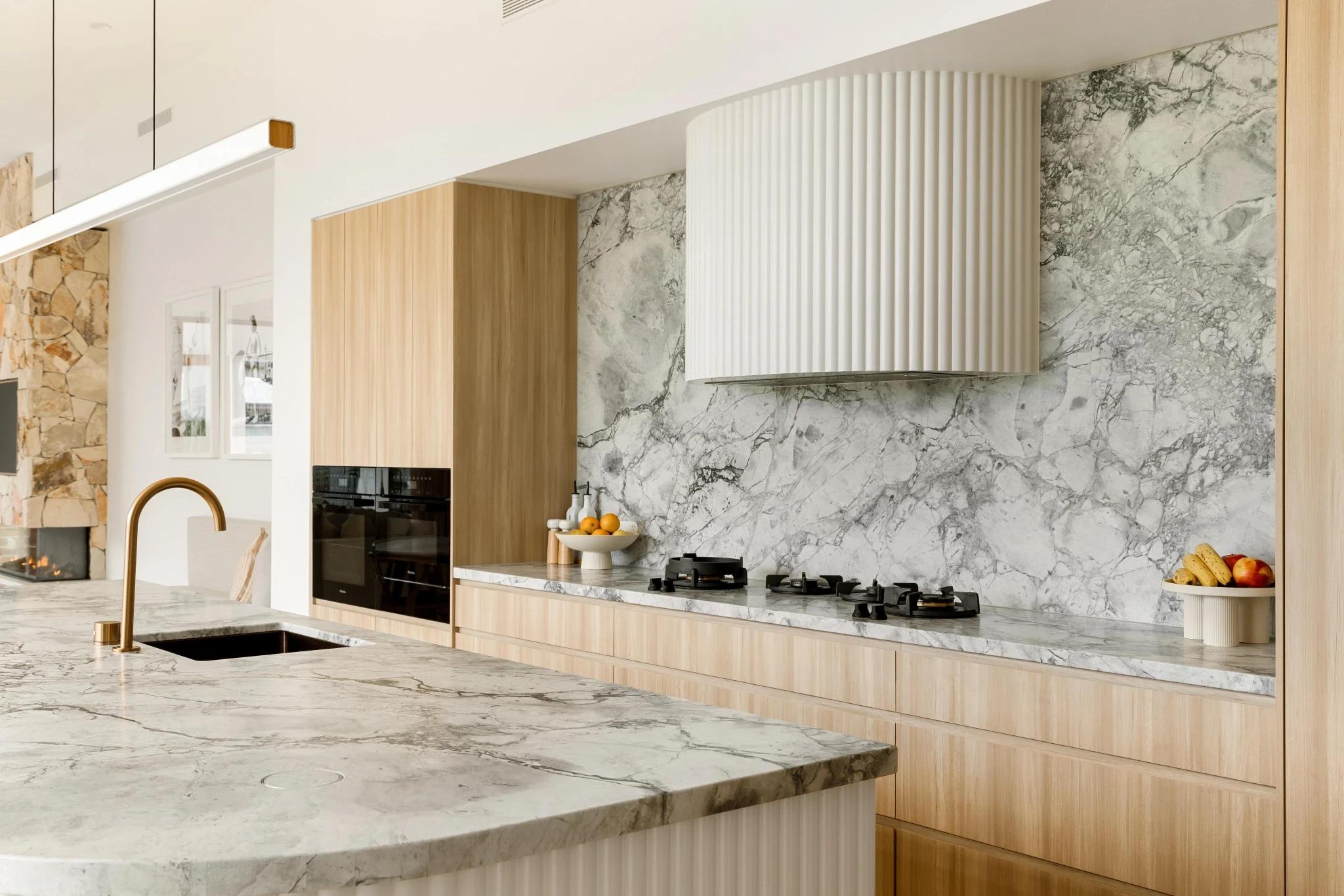
Natural stone offers an immediate sense of luxury and authenticity, making it a premier choice for a high-end kitchen splashback. Materials like marble, granite, and limestone bring unique veining, texture, and character, ensuring no two installations are ever identical. This bespoke quality creates an elegant focal point, perfectly suited for custom residential projects where organic beauty and lasting value are paramount.
The inherent sophistication of natural stone allows it to anchor a wide range of design aesthetics. A book-matched marble slab can create a dramatic, artistic statement in a contemporary Brisbane home, while a honed granite splashback provides robust, understated elegance in a busy family kitchen on the Sunshine Coast. Its connection to the natural world introduces a calming, grounding element into the heart of the home.
Implementation and Styling
Executing a natural stone splashback requires careful material selection and design integration to maximise its impact. The continuity between surfaces is key to achieving a refined and cohesive look.
- Benchtop Integration: For a seamless, monolithic appearance, continue the same stone from the benchtop up the wall. This creates a bold, continuous visual flow that makes the space feel larger and more integrated.
- Honed vs. Polished: While a polished finish reflects more light, a honed finish is often preferred for splashbacks. Its matte surface is better at disguising fingerprints and water spots, offering a more practical solution without compromising on elegance.
- Complementary Grout: Use a neutral grout colour that blends with the stone's primary tones. This prevents the grout lines from distracting from the natural beauty and intricate patterns of the stone itself.
The weight of natural stone slabs requires a structurally sound wall substrate. Proper planning and professional installation are essential to ensure the stone is adequately supported and perfectly aligned. The process of selecting the right materials for luxury home design involves balancing aesthetics with such practical, long-term performance factors.
3. Porcelain and Ceramic Tile Splashbacks
Modern porcelain and ceramic tiles provide outstanding durability and design flexibility, moving far beyond traditional options. Available in a vast array of colours, textures, and finishes, from matte to high-gloss and smooth to textured, they are a practical yet stylish choice. This versatility makes them ideal for creating unique kitchen splashbacks ideas that balance creative expression with everyday liveability in high-end residential projects.
The sheer variety allows for precise customisation to suit any design vision. Matte black porcelain can deliver a dramatic, contemporary look, while large-format, stone-effect tiles can create a seamless, organic feel. For heritage Queenslander renovations, textured cream tiles add warmth and tactile interest, perfectly complementing the home's character.
Implementation and Styling
Achieving a refined look with porcelain or ceramic tiles hinges on thoughtful selection and application. The tile format and finish are key decisions that define the kitchen's atmosphere.
- Large-Format Tiles: Using large tiles minimises grout lines, creating a clean, monolithic look. This is especially effective for minimalist designs where the goal is a sleek and uninterrupted surface.
- Textured Finishes: A tile with a subtle texture adds visual depth and dimension to the kitchen. This finish is also highly practical, as it can help disguise fingerprints and water spots better than a smooth, glossy surface.
- Grout Coordination: Plan your grout colour carefully. A contrasting grout will highlight a geometric pattern or unique tile shape, while a matching grout will create a more uniform and subtle appearance.
Porcelain is exceptionally dense and non-porous, making it highly resistant to stains, scratches, and heat, a significant advantage for a hardworking kitchen. When selecting tiles, confirm the finish is suitable for a splashback application and coordinate it with adjacent materials, like benchtops and cabinetry, for a cohesive design. The successful integration of these elements is a core principle of our interior design services.
4. Herringbone and Patterned Tile Splashbacks
Herringbone and other geometric tile layouts introduce a layer of dynamic movement and visual texture, transforming the splashback from a purely functional surface into a striking design feature. Arrangements like herringbone, chevron, or intricate mosaics offer a sophisticated alternative to standard tile bonds, creating a focal point that draws the eye. This approach is ideal for high-end residential projects where the design aims to balance classic materials with a creative, contemporary edge.
The ordered complexity of a patterned splashback introduces a sense of bespoke craftsmanship to the space. Using materials like marble in a herringbone layout can elevate the feeling of luxury, while a chevron pattern in porcelain adds a sharp, modern graphic element. These designs work exceptionally well when balanced with simpler surrounding finishes, allowing the splashback to act as the primary design statement without overwhelming the kitchen's overall aesthetic.
Implementation and Styling
Executing a patterned tile splashback with precision is key to achieving a refined, high-end appearance. Careful planning and specific styling choices can significantly impact the final outcome.
- Emphasise with Grout: A contrasting grout colour, such as dark grey against a light tile, will accentuate the geometric pattern and make it a more prominent feature. Conversely, a matching grout creates a softer, more textural look where the pattern is subtle.
- Balance the Design: For a complex or busy pattern, pair it with simple, flat-panel cabinetry and a uniform benchtop material. This ensures the patterned tile remains the hero of the design without creating visual clutter.
- Plan the Layout: A successful patterned installation starts with a meticulous plan. Begin tiling from the visual centre of the splashback and work outwards to ensure a symmetrical, balanced appearance with minimal awkward cuts at the edges.
Experienced tilers understand the nuances of setting complex patterns, ensuring consistent grout lines and a professional result. For natural stone tiles like marble, specify a high-quality penetrating sealer to protect against stains and moisture ingress.
5. Stainless Steel Splashbacks
Stainless steel splashbacks bring a sleek, professional aesthetic directly from commercial kitchens into high-end residential design. This material offers a seamless and contemporary surface that is both highly durable and hygienic. Its reflective quality amplifies natural and artificial light, making the kitchen feel larger and brighter.
The non-porous nature of stainless steel makes it resistant to heat, water, and stains, providing exceptional performance behind cooktops and sinks. Its minimalist appeal creates a clean backdrop that allows architectural details, custom cabinetry, or a statement island benchtop to become the focal point. This makes it a popular kitchen splashback idea for projects aiming for a sophisticated and functional, almost industrial-chic, aesthetic.
Implementation and Styling
Achieving a refined look with stainless steel requires careful specification and integration. The finish and surrounding materials are key to avoiding a cold or clinical feel.
- Specify a Brushed Finish: A brushed or satin finish is far more practical than a polished one for a kitchen environment. It expertly hides fingerprints, minor scratches, and water spots, maintaining a clean look with less effort.
- Coordinate with Appliances: Create a cohesive and intentional design by matching the splashback's finish with your stainless steel appliances, such as the oven, rangehood, and refrigerator.
- Introduce Warmth: Balance the cool tone of the steel by pairing it with natural materials. Timber cabinetry, stone benchtops, or wooden flooring can prevent the space from feeling sterile and add textural depth.
Ensure the steel is a suitable grade for kitchen use, offering good corrosion resistance. While stainless steel is a robust choice, understanding its properties is key to integrating it effectively throughout a home. For those exploring similar modern materials, this guide to stainless steel offers useful insights into material performance and aesthetics that can be applied to various design elements.
6. Glass Splashbacks
Glass splashbacks deliver a sleek, seamless, and contemporary finish, prized for their minimalist appeal and remarkable design flexibility. A single sheet of toughened glass, often colour-backed, frosted, or digitally printed, creates a grout-free surface that enhances a feeling of spaciousness and light. This quality makes them an excellent choice for modern architectural homes, from open-plan Brisbane residences to compact urban apartments where maintaining visual flow is paramount.
The non-porous surface is exceptionally hygienic and easy to clean, a practical advantage in any busy kitchen. Furthermore, the reflective nature of glass amplifies both natural and artificial light, making the entire kitchen feel brighter and more open. This effect is particularly beneficial where maximising light is a key design objective. The ability to customise colour and imagery also allows for a high degree of personalisation.
Implementation and Styling
Achieving a sophisticated result with glass kitchen splashback ideas depends on careful selection and precise installation. The chosen finish can dramatically influence the kitchen's overall atmosphere.
- Colour-Backed Glass: Selecting a specific paint colour to be applied to the back of the glass allows for perfect coordination with cabinetry, benchtops, or wall colours. A subtle, neutral tone can create a calm backdrop, while a bold colour introduces a vibrant focal point.
- Frosted or Mirrored Glass: A frosted finish offers a soft, diffused look that cleverly conceals minor splashes and fingerprints. Mirrored glass, especially with a bronze or grey tint, adds a touch of glamour and creates the illusion of a much larger space.
- Digital Printing: For a truly bespoke statement, custom digital printing can embed any high-resolution image or pattern onto the glass. This could be an abstract graphic, a landscape photograph, or a textural design, turning the splashback into a unique piece of art.
Professional measurement and installation are critical for a perfect fit, especially around power points and cabinetry. The glass must be heat-toughened to comply with Australian safety standards for use behind cooktops. Ensuring the wall behind is smoothly finished and painted a neutral colour is also important, particularly for clear or lightly frosted glass, as any imperfections may be visible.
7. Timber and Wood-Look Splashbacks
Timber splashbacks introduce a powerful sense of warmth and organic texture, grounding a kitchen design with natural character. This approach is highly effective in softening contemporary spaces or enhancing the authentic charm of heritage renovations, such as Queenslander homes. By incorporating the natural grain and tones of wood, these kitchen splashbacks ideas create an inviting, tactile backdrop that feels both refined and connected to nature.
The use of timber or realistic wood-look alternatives adds acoustic softness and visual depth, balancing the hard surfaces typical in kitchens like stone benchtops and polished concrete floors. This material choice is perfect for creating a seamless flow in open-plan living areas where the design aims to blur the lines between indoors and out. It establishes a welcoming atmosphere that encourages gathering and social connection.
Implementation and Styling
Achieving a durable and beautiful finish with timber requires careful selection and application. The key is to balance aesthetic appeal with the practical demands of a kitchen environment.
- Timber-Look Porcelain: For areas requiring maximum durability and minimal maintenance, especially around sinks and cooktops, timber-look porcelain tiles are an excellent choice. They offer the visual warmth of wood without being susceptible to moisture, heat, or staining.
- Horizontal Orientation: Installing timber planks horizontally can make a kitchen feel wider and more spacious. This technique draws the eye along the length of the benchtop and complements long, clean lines in modern cabinetry.
- Material Harmony: Select a timber species or finish that complements other wood elements in the home, such as flooring or joinery, to create a cohesive and considered interior palette.
For authentic timber installations, a regular maintenance schedule is essential to preserve the material's integrity and appearance. A quarterly application of a suitable sealant or oil will keep the wood nourished and protected. This proactive care ensures the splashback remains a lasting feature rather than a liability.
8. Cement and Concrete-Look Splashbacks
Industrial-inspired cement or concrete-look finishes bring a sophisticated, contemporary aesthetic to kitchens, bridging the gap between modern minimalism and transitional warmth. These materials offer incredible visual texture and depth while maintaining practical durability. Their raw, honest character makes them an excellent choice for high-end residential projects aiming for an understated yet impactful design statement.
The muted grey tones provide a neutral backdrop that pairs exceptionally well with a wide range of materials and colours. Unlike a flat painted wall, a concrete-look surface introduces subtle variations and a tactile quality that elevates the entire kitchen design. This approach aligns perfectly with a philosophy of balancing strong visual interest with long-term performance, creating a space that feels both current and enduring.
Implementation and Styling
Achieving a refined look with this kitchen splashback idea depends on creating a balanced material palette to avoid a cold or overly clinical feel.
- Warm Material Pairing: Soften the industrial edge by pairing concrete-look splashbacks with natural timber cabinetry, warm metallic tapware, or leather hardware.
- Textured Finishes: Opt for a textured concrete-look finish, such as that found in high-quality porcelain tiles. This not only adds visual depth but also cleverly disguises minor water spots and everyday dust.
- Colour Coordination: For a cohesive design, coordinate the splashback with other grey tones in the kitchen, such as a concrete island bench, polished concrete floors, or stone-look benchtops.
The concrete must be professionally sealed with a high-grade, food-safe sealant and a clear maintenance schedule must be established to prevent staining and moisture absorption. Proper substrate preparation and waterproofing are, as always, essential for a durable, long-lasting installation.
9. Brick and Exposed Brick Splashbacks
Brick splashbacks introduce a powerful sense of textural warmth and architectural character to a kitchen, making them a standout choice for projects that value authenticity and substance. Whether using genuine reclaimed brick or high-quality brick-look tiles, this material adds a robust, tactile quality that complements both heritage and industrial-transitional designs. It is particularly effective in Queenslander renovations, where exposed brick can honour the home's original construction and history. The natural colour variations and raw texture of brick provide a rich, layered backdrop that prevents a kitchen from feeling sterile.
Implementation and Styling
Achieving a refined yet authentic look with brick requires careful material selection and finishing touches. The approach differs depending on whether authentic or reproduction materials are used.
- Authentic Reclaimed Brick: For heritage projects, sourcing genuine reclaimed brick that matches the home’s era creates an unparalleled sense of continuity. The mortar colour is also critical; a lighter mortar can brighten the look, while a darker tone creates a more dramatic, industrial feel.
- Brick-Look Porcelain Tiles: These modern alternatives offer the aesthetic of real brick without the porosity and maintenance challenges. They are lighter, easier to install, and provide a consistent finish, making them a practical compromise between authenticity and liveability.
- Sealing for Durability: When using authentic brick, especially around the cooktop and sink, it is essential to apply a high-quality matte or penetrating sealer. This protects the porous surface from grease splatters and moisture absorption without creating an artificial high-gloss shine.
The weight of genuine brick requires a structurally sound substrate capable of supporting the load. Always coordinate the brick's tone and texture with other key elements like benchtops, cabinetry, and flooring to create a cohesive material palette that feels intentional and well-designed.
10. Bespoke and Custom Design Splashbacks
Bespoke splashbacks represent the ultimate expression of personalisation in kitchen design, moving beyond standard materials to create a feature that is entirely unique to the client and their home. This approach involves commissioning a made-to-order piece, which could range from digitally printed glass featuring custom artwork to intricate mosaics or mixed-material compositions. It is a direct reflection of a homeowner's individual vision, making it an ideal choice for high-end residential projects where every detail is considered.
This level of customisation ensures the splashback integrates perfectly with other kitchen elements, such as cabinetry, benchtops, and lighting. For instance, a bespoke splashback could incorporate timber or metal accents that echo materials used elsewhere in the home, creating a cohesive and deeply personal design narrative. It is one of the most effective kitchen splashbacks ideas for homeowners wanting to make a distinct statement that cannot be replicated.
Implementation and Styling
Executing a custom splashback successfully requires a collaborative process between the homeowner, designer, and specialist fabricators or artists. The possibilities are extensive and guided by the project's overall aesthetic goals.
- Digital Printing: Transfer a high-resolution photograph, a piece of architectural art, or an abstract pattern onto glass or acrylic for a modern, seamless finish.
- Mixed Materials: Combine sections of stone, metal, and timber within the splashback area to create texture, depth, and a direct link to other finishes in the space.
- Custom Tile Layouts: Commission oversized, custom-format tiles or hand-painted ceramics arranged in a unique geometric or artistic pattern that serves as a central focal point.
Given the unique nature of these installations, allow for extended lead times for material sourcing and fabrication. Detailed documentation outlining all specifications, finishes, and installation requirements is essential for a flawless result. This meticulous planning is a cornerstone of the custom home design process, ensuring every element aligns with the client's expectations and the home's architectural integrity.
Bringing Your Vision to Life: From Ideas to Impeccable Execution
Your kitchen splashback is far more than a functional barrier against spills and splatters; it's a powerful design element that sets the tone for the entire space. Each of the options explored here brings something distinct to a kitchen design, and the right choice is always the one that works in concert with the home's broader architectural character. This single feature has the ability to unify your design scheme, introducing colour, texture, and light in a way that truly reflects the architectural character of your home.
The journey from a catalogue of inspiration to a beautifully finished kitchen requires careful consideration. Selecting a material is just the beginning. The real artistry lies in the details: the grout colour that makes a herringbone pattern pop, the precise veining in a marble slab that aligns with your benchtops, or the custom lighting designed to accentuate the reflective qualities of a glass panel. For homeowners embarking on renovations of iconic Queenslanders or planning a new coastal build, these choices are paramount in creating a space that is both authentic and enduring.
Key Takeaways for a Flawless Finish
To ensure your vision is realised without compromise, remember these critical takeaways:
- Cohesion is Key: Your splashback must work in concert with your cabinetry, benchtops, flooring, and lighting. Always view samples together in your kitchen's natural light before making a final decision. A choice that looks wonderful in a showroom can appear completely different under the unique lighting conditions of your home.
- Balance Aesthetics with Practicality: While a textured brick or porous natural stone may offer stunning visual appeal, be honest about your lifestyle. A household with enthusiastic cooks or young children might be better served by non-porous materials like glass, porcelain, or stainless steel that simplify cleaning and maintenance.
- Don't Underestimate Grout: For tiled options, grout colour is a significant design decision, contrasting creates a graphic feature, matching creates a seamless finish. Epoxy grout is worth specifying in high-use areas for superior stain resistance.
A detailed guide on choosing the best tile for your kitchen backsplash can provide specific insights into durability, porosity, and maintenance that will help you make a confident and informed decision.
Ready to translate your kitchen vision into a meticulously planned and beautifully executed reality? The team at Invilla Architecture specialises in creating bespoke, high-performing homes for clients. We guide you through every selection, from splashbacks to structural systems, ensuring a seamless process and an exceptional outcome. Contact Invilla Architecture to discuss your project today.