

An Australian Hamptons style facade gives a home its first hello. It’s what greets the street, frames the entry and sets the tone for the spaces that follow. The Hamptons look is instantly recognisable, calm, symmetrical and quietly elegant, but in Australia, it evolves. Our version is softened, more relaxed, shaped by local climate and the way we live. It keeps the classic form while carrying a distinctly Australian spirit.
What Defines a Hamptons Facade
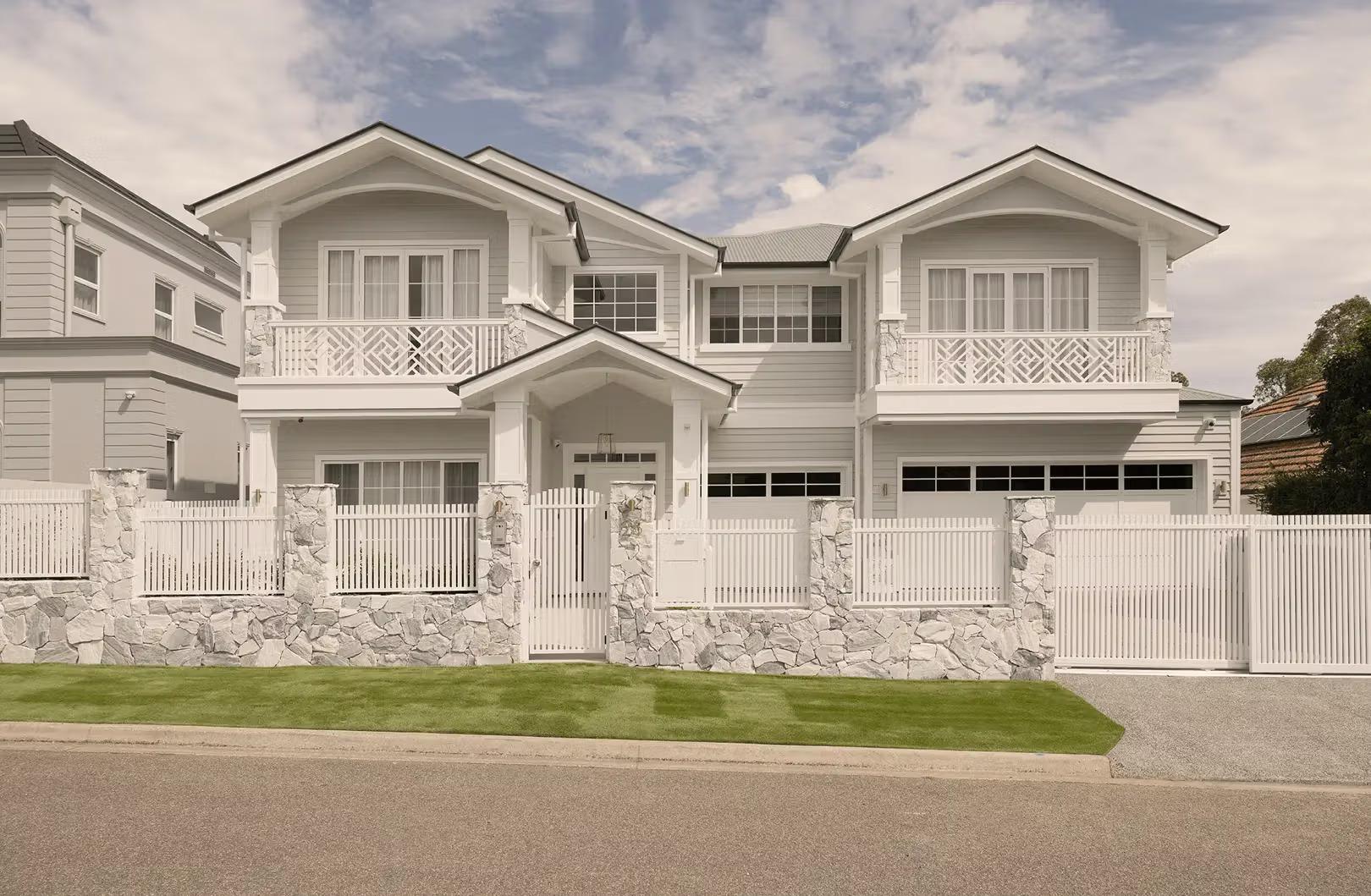
A Hamptons or traditional facade is built on a sense of order, balance and calm. Its appeal comes from symmetry, generous roof forms, soft coastal colours and a timeless approach to scale. The style feels relaxed rather than ornamental, elegant without needing to draw attention. This overarching character is what connects traditional Hamptons architecture with the Australian interpretations we see today.
Key Elements of an Australian Hamptons Style Facade
A well-resolved Australian Hamptons style facade is defined by a few consistent architectural cues. These elements create familiarity while still allowing room for individual expression.
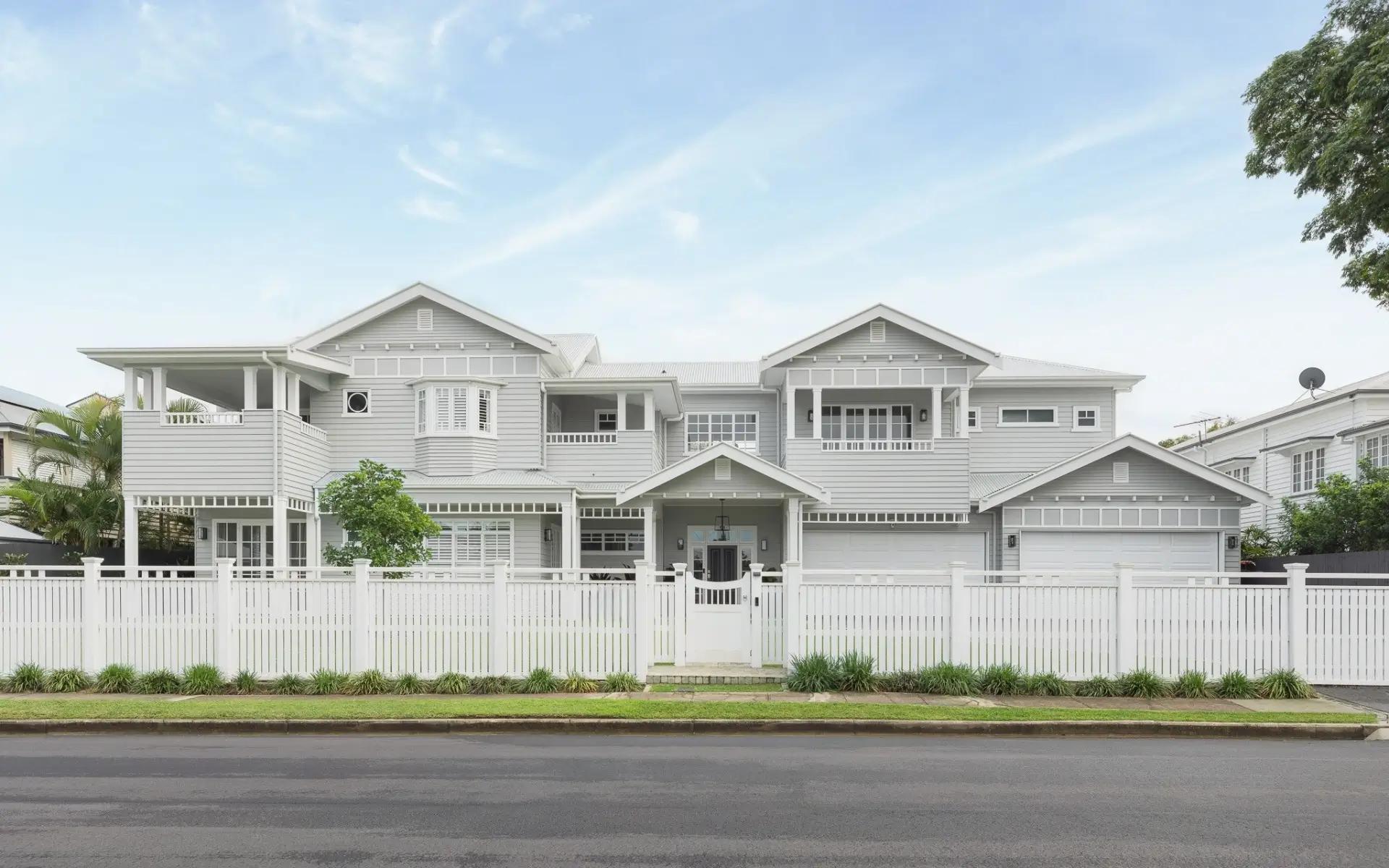
Gabled rooflines: clean pitches that frame the home and give height
Weatherboard cladding: either timber or fibre-cement, finished in soft, coastal tones
Balanced window rhythms: evenly spaced openings that bring light and order
Deep verandahs: practical protection from Australian sun and rain
Restrained detailing: enough detail to enhance the form without overwhelming it
Natural materials: stone bases, polished timber, coastal-inspired textures
When these components work together, the facade feels calm, cohesive and unmistakably Hamptons.
What Makes It Australian: Climate, Scale and Material Response
Australian conditions shape how Hamptons facades are interpreted. High sun exposure, coastal humidity, varied block sizes, and emphasis on outdoor living all influence proportions, materials and roof forms. These factors guide decisions about shading, thermal performance, durability and scale, the architectural principles that underpin an Australian Hamptons style facade.
Getting those adaptations right is core to our custom home design process, where the facade grows out of the plan rather than being applied to it.
Adapted for Australian Conditions
These principles translate into clear, practical adaptations. Deeper eaves protect from harsh sun, lighter roof colours reduce heat gain and verandahs extend to create shaded outdoor rooms. Window placements shift to capture breezes, and materials like fibre-cement weatherboards perform better in Australian heat. These adjustments make the Hamptons look feel settled here, familiar in form but grounded in local conditions.
Material Palette
Texture is what gives an Australian Hamptons style facade its depth. Restraint is essential:
Cladding: timber or fibre-cement weatherboards in soft whites, muted greys or gentle coastal tones
Stonework: sandstone or stacked stone bases that anchor the home
Roofing: gabled forms in pale or mid-tone Colorbond suited to Australian heat
Details: shutters, simple trims, lantern lighting and porch brackets used with intention
Each element supports the composition, no single feature competing for attention.
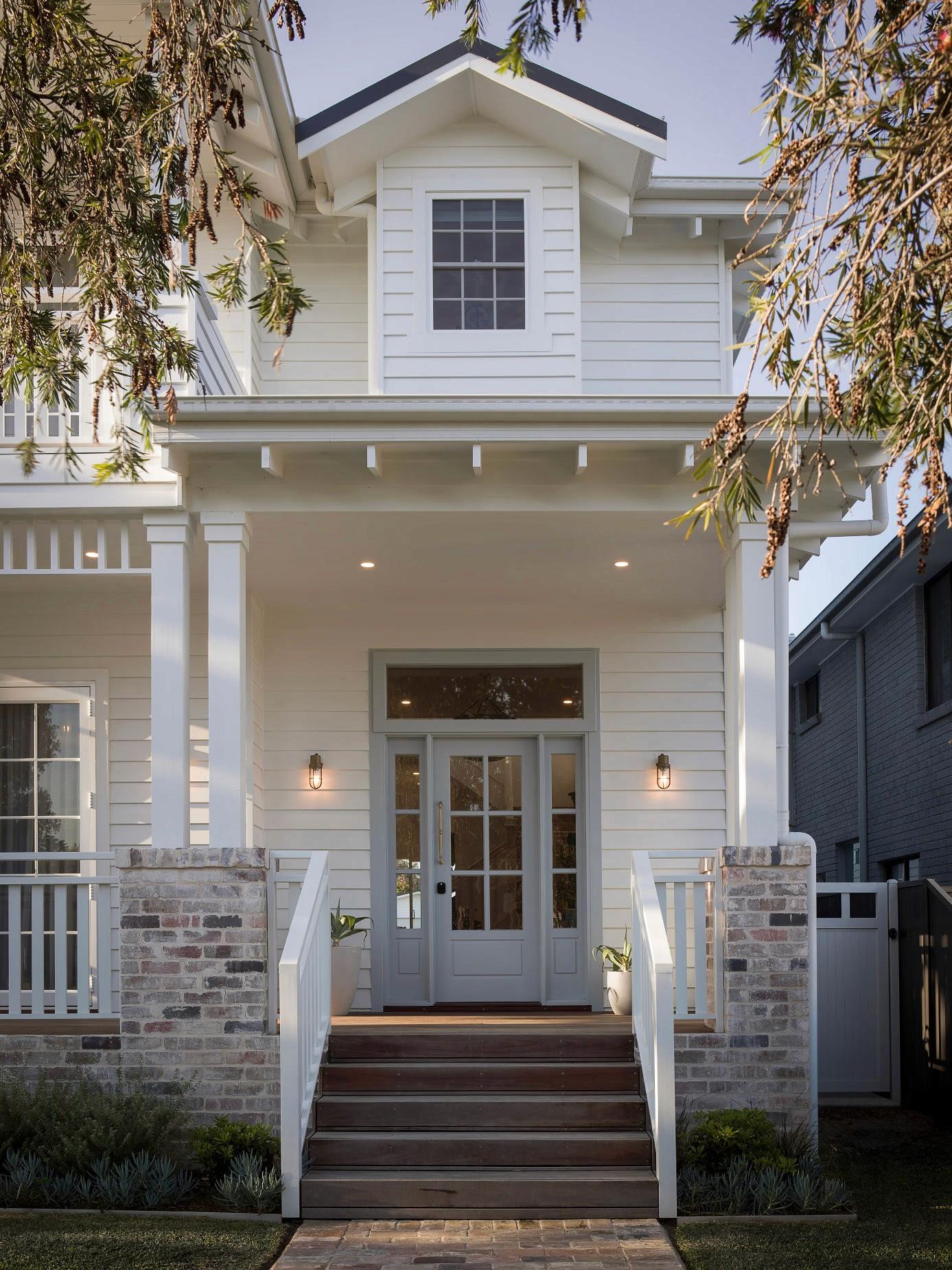
The Front Door as Statement
The entry is where the Hamptons character comes into focus. Panelled doors in navy, charcoal or sage set the mood, often framed by a porch or verandah that softens the arrival. Landscaping plays its part, hydrangeas, coastal natives or layered greenery that leans toward the path.
Handled well, the front door becomes both anchor and welcome, a subtle statement rather than a showpiece.
Invilla’s Approach
At Invilla, the facade is shaped by proportion and context rather than ornamentation. For Australian Hamptons style facades, we refine the architectural language so the form can breathe, adjusting verandah depth, window rhythm and roof balance to suit the site and climate. The result is a facade that feels composed, functional and naturally suited to everyday life.
Modern Variations of the Hamptons Facade
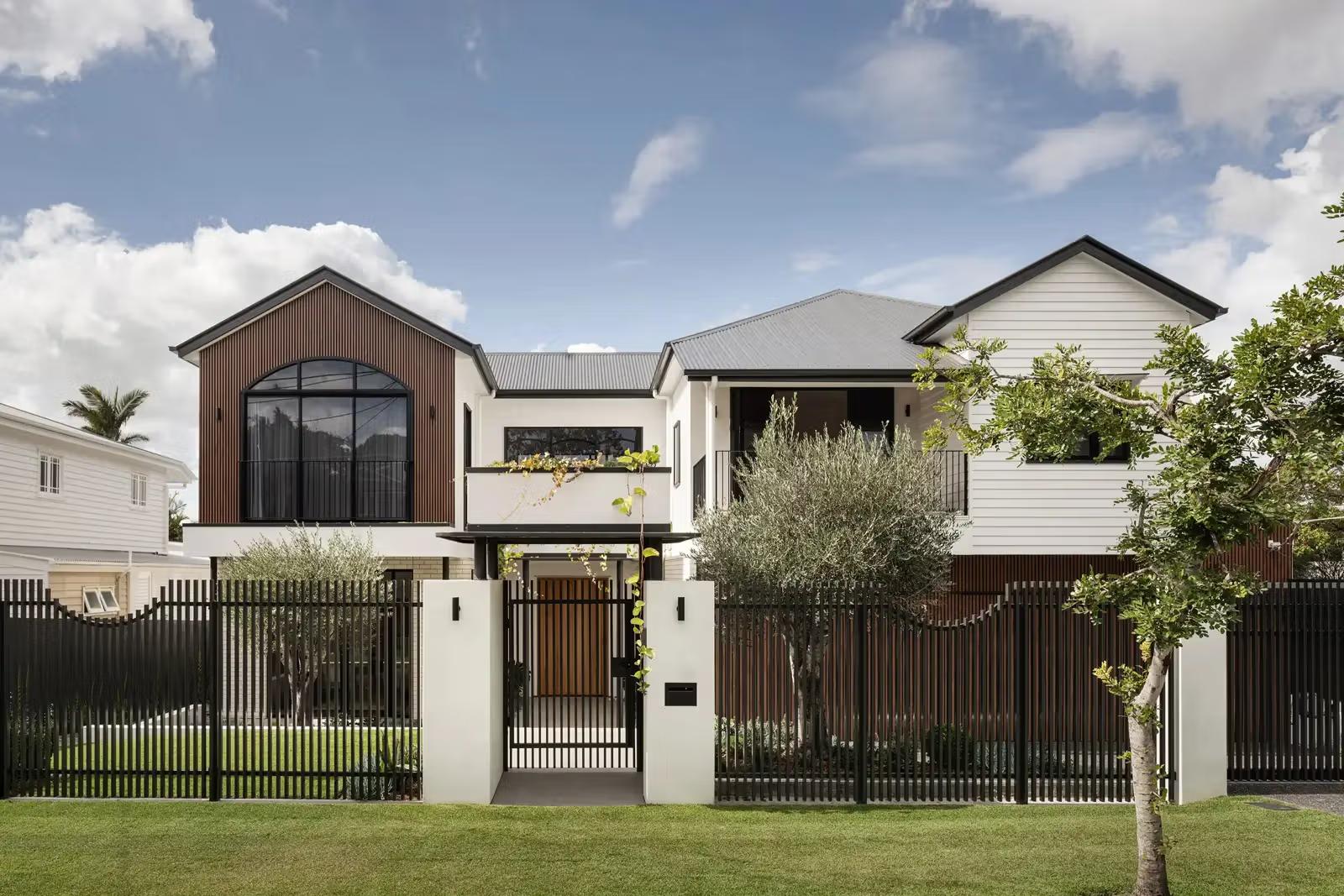
Many Australian homes now take a modern approach to the Hamptons facade. This might mean cleaner lines, lighter colour palettes, more streamlined window profiles or simplified decorative features. The essence remains, calm symmetry, coastal ease, layered texture, but delivered with a more contemporary feel.
Why It Endures
The Australian Hamptons style facade endures because it balances refinement with comfort. It suits a wide range of settings, ages gracefully and remains relevant even as design trends shift. More than a style, it offers a calm, welcoming impression that feels easy to live with long-term.
Planning an Australian Hamptons facade? Contact Invilla to discuss how we can tailor the design to your site and lifestyle.