

A luxury bathroom is defined by how it feels, not by how much is in it: natural light arriving generously, materials you want to touch, space that breathes, and a sense of calm the rest of the day doesn't offer. That's why the most reliable route to a genuinely luxurious bathroom is design rather than shopping. The room's proportions, its window, its relationship to the bedroom and the garden are decided long before a single tile is chosen, and they're what separate a bathroom that photographs well from one that feels extraordinary every morning.
This guide covers the elements that consistently create that feeling, and how we design them into the custom homes and major renovations we work on across Brisbane.
What makes a bathroom feel luxurious:
- Natural light, handled privately. A bathroom with real daylight feels like a different category of room.
- Space to breathe. Luxury reads in the gaps: around the bath, between the vanities, above your head.
- Materials with depth. Stone, timber and quality tapware reward daily contact in a way flat surfaces can't.
- A place in the plan. The bathroom's position, outlook and connection to the bedroom are floor plan decisions.
- Light layered for the day. Bright for the morning, soft for the evening, designed rather than defaulted.
Luxury Bathroom Elements at a Glance
Element | What it brings | Design notes |
|---|---|---|
Natural light | The single biggest shift in how a bathroom feels | Windows, skylights or clerestory glazing, placed for privacy |
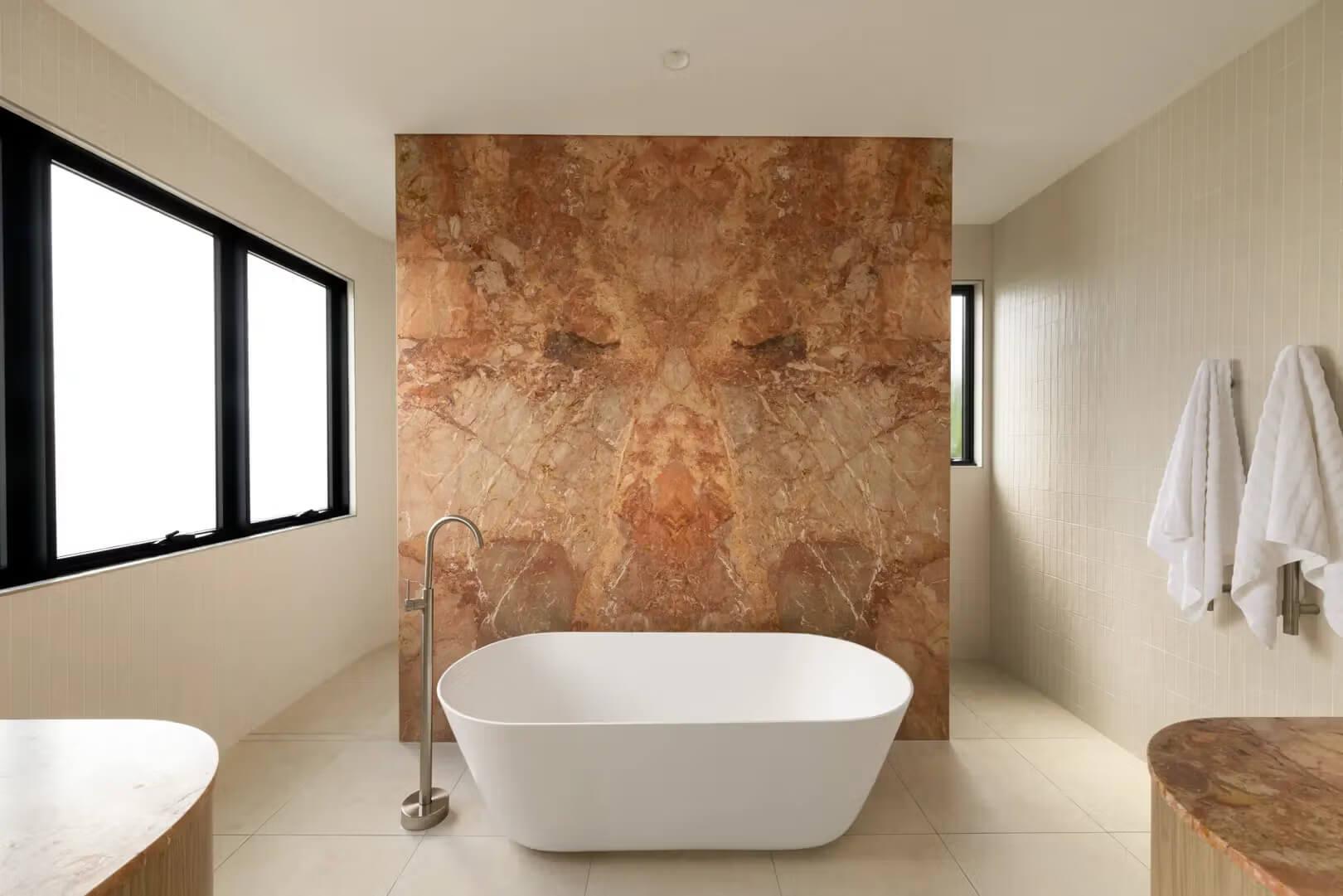
Freestanding bath | A sculptural centrepiece and a genuine ritual | Wants space around it; suits bathers, not every household |
Walk-in or wet-room shower | Openness, easy movement, a spa-like character | Frameless glass and linear drainage keep the floor continuous |
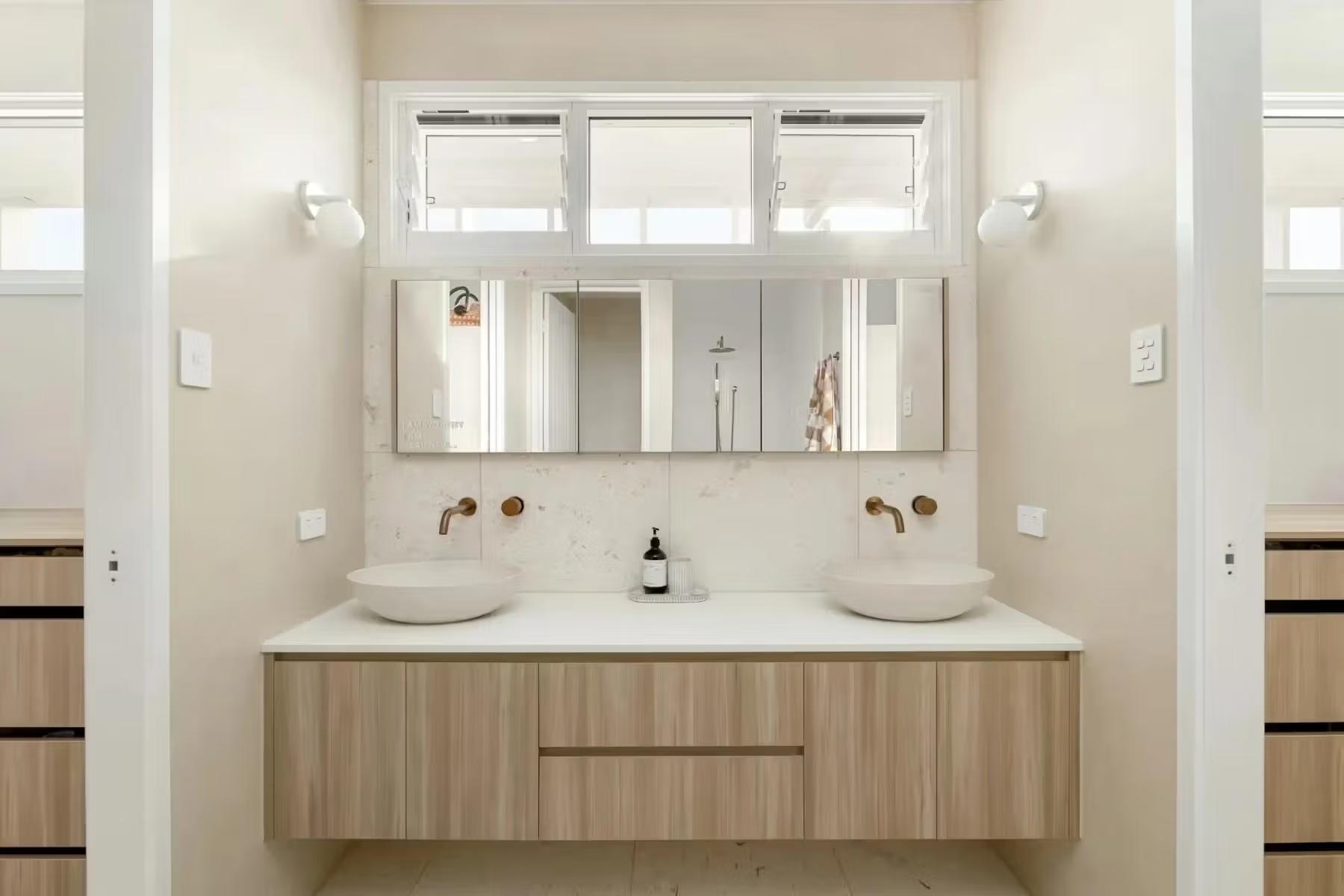
Double vanity | Two people, one calm morning | Custom joinery keeps storage inside the design |
Stone surfaces | Depth, permanence and natural variation | Carried across benchtop and walls for continuity |
Layered lighting | The room changed by time of day | Covered fully in our lighting guide below |
Luxury Starts With Light
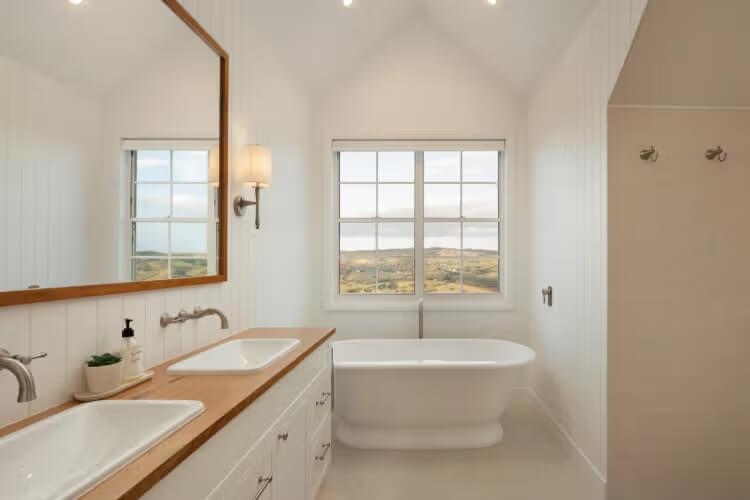
Every memorable bathroom we've designed begins with the same question: Where does the daylight come from? A window over a bath, a skylight above the shower, or clerestory glazing running above the joinery all bring the day into the room while keeping it completely private. The placement is the design work: high glazing gives light without sightlines, a garden window turns the bath toward something living, and orientation decides whether the room glows in the morning or the afternoon. Get the natural light right and everything else in the room starts from in front.
Materials That Carry the Room
Bathrooms are touched more than any other room in the house, which is why materials do so much of the luxury work. Stone brings variation and permanence; timber brings warmth into a room that can otherwise run cold; quality tapware and basins are felt every single day.
The through-line matters more than any single material: a luxury bathroom reads as one composed room, with the stone, the joinery, the floor and the metals chosen together, and the palette carried continuously from the architecture through to the hardware.
The Ensuite as Retreat
The main ensuite is where luxury bathroom design earns its keep, because it's the room that bookends every day. The moves we return to are: a direct, considered connection to the bedroom rather than a corridor; the vanity zone separated from the wet zone so two people can move through different routines; and where the block allows it, an outlook, even a small private garden, from the bath or shower. A luxury ensuite doesn't need to be vast. It needs to be arranged around the actual morning and evening routines it will host.
Designed Into the Architecture
The reason bathroom design belongs with the home's design is practical: nearly every luxury element above is structural. The window over the bath needs the facade designed for it. The skylight needs the roof planned for it. The wet-room floor needs the slab set down for it, and the joinery wants wall dimensions that fit it to the millimetre. That's why our interior design happens inside the architecture of the whole project: the bathroom's best moments are drawn into the house from the beginning, when every one of them is simply part of the design.
Lighting: The Fast Path to Luxury After Dark
Daylight makes the bathroom by day; layered lighting makes it by night. Wall lights at face height for the mirror, concealed strips for a soft evening glow, and switching that lets the room change register from morning to bath time. It's a topic with enough depth that we've written a full guide to bathroom lighting, which pairs with everything here.
Common Luxury Bathroom Questions
What makes a bathroom luxurious? Natural light, generous space, materials with depth and a layout designed around how the room is actually used, morning and night. Fittings contribute, but the feeling comes from the design: proportion, light and the room's place in the home's plan.
What are the key elements of a luxury bathroom design? The recurring set: daylight brought in privately, a freestanding bath or wet-room shower as the centrepiece, custom joinery and a double vanity where the household needs one, stone or other natural surfaces carried consistently, and lighting layered for different times of day.
Does a luxury bathroom need a freestanding bath? No. A freestanding bath suits households that genuinely bathe; for others, a generous wet-room shower is the better centrepiece. Luxury is the room fitting your actual routine, and either choice can anchor a beautiful bathroom.
How do you get natural light into a bathroom privately? Placement does the work: high-level or clerestory glazing brings daylight in above sightlines, skylights light the room from the roof, and windows can open onto a screened private garden rather than the street. It's designed with the home's facade and roof, which is why it's easiest to achieve when the bathroom is designed with the house.
Start With the Whole Home
A bathroom like the ones in this guide is designed into a home, not added to one, and that whole-home design is exactly what we do. Get your project estimate, or get in touch and tell us about the project you have in mind.