

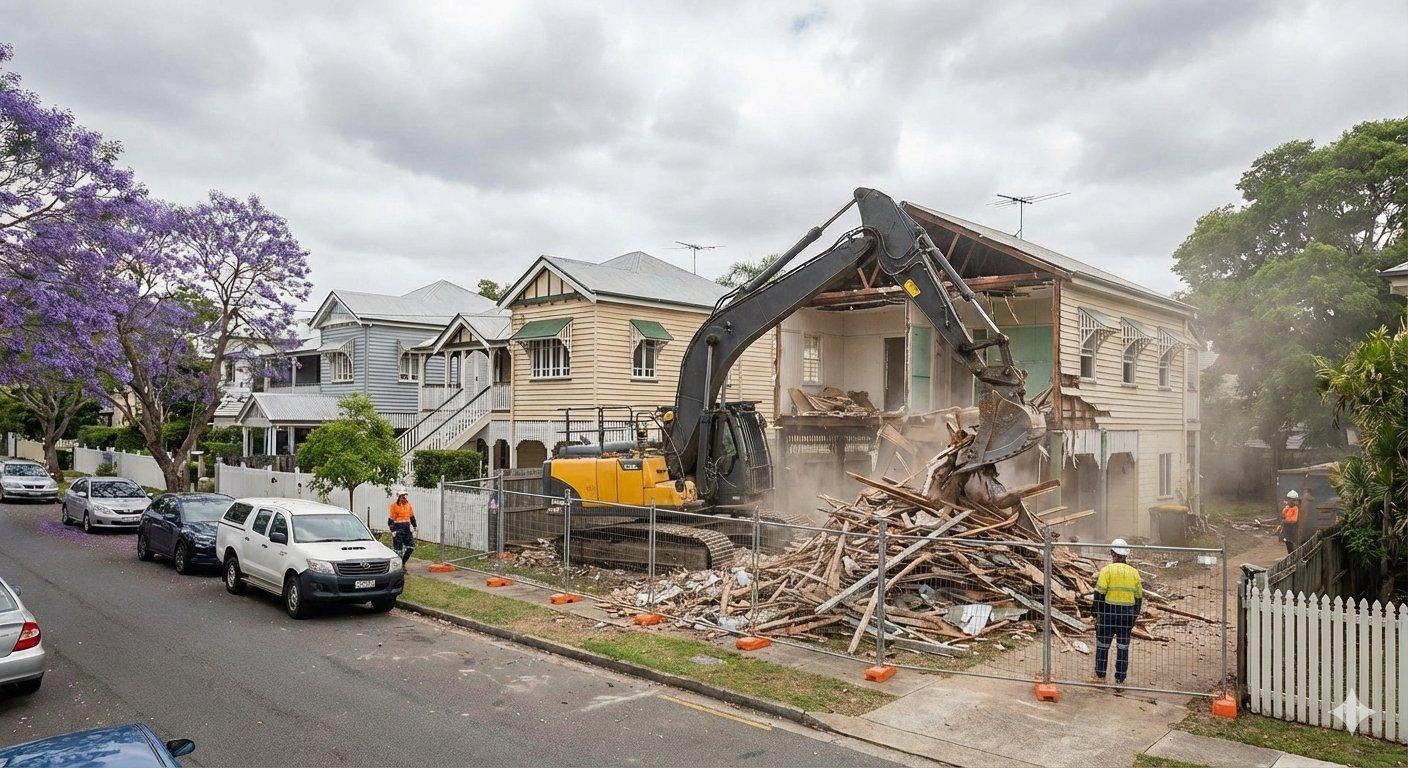
So, exactly how much to demolish a house? In Australia, the average cost to demolish a house typically falls between $12,000 and $40,000. For homeowners planning a knock-down rebuild, a home demolition is rarely a standalone cost, it is the first technical step in a much larger, carefully coordinated architectural project. While a standard, single-storey, three-bedroom timber home on a clear block might average around $17,000, what you actually pay depends on several project-specific variables.
If that is the path you are weighing up, a knock down rebuild designed by a Brisbane architect treats the demolition plan and the new home as one decision, so the budget covers the whole journey rather than one stage at a time.
Top Factors Influencing Home Demolition Costs:
- Size and Structure: Multi-storey brick homes cost significantly more to dismantle than single-level timber cottages.
- Asbestos Removal: Safe extraction by licensed professionals adds a non-negotiable premium to the budget.
- Site Access: Steep driveways or narrow streets can restrict heavy machinery, increasing labour time.
- Permits and Disconnections: Council fees and utility capping are essential pre-demolition expenses.
- Waste Disposal: Heavy materials like concrete directly increase tipping and transport fees.
Breaking Down the True Costs of House Demolition
Like a restaurant bill, a demolition quote is made up of separate services, each contributing to the final price. Understanding what’s included helps you avoid surprises and get a genuinely comparable quote.
For a deeper dive into managing your finances from the start, check out our guide on how to manage your budget in residential home design.
Key Cost Components in a House Demolition Quote
So, what exactly are you paying for when you get that quote? There are a few core expenses that consistently appear. These cover the physical teardown, waste disposal, and all the critical safety measures that have to happen before a single wall comes down.
- Hazardous Material Removal: This is a big one. If your home was built before 1990, there’s a good chance it contains asbestos. Its safe removal and disposal by licensed professionals is a significant and completely non-negotiable cost.
- Permits and Council Fees: You can’t just knock a house down. Local councils require specific demolition permits, which come with their own application and approval fees.
- Utility Disconnections: Before the machines roll in, services like electricity, gas, water, and sewerage must be safely disconnected and capped off. This is a job for qualified technicians, not the demolition crew.
- Site Preparation and Cleanup: This covers everything from putting up temporary fencing and sediment control barriers to the final clearing and levelling of the block once the house is gone.
To give you a clearer picture, here’s a rough breakdown of what those expenses might look like for a typical project.
Estimated Demolition Cost Breakdown for a Standard Australian Home
This table outlines the typical cost components and their estimated price ranges for demolishing a standard three-bedroom house in Australia. On higher-value sites or constrained blocks, several of these items often sit at the upper end of the range.
Expense Item | Estimated Cost Range (AUD) |
|---|---|
Demolition Permit & Council Fees | $500 – $2,500 |
Utility Disconnection Services | $1,000 – $3,000 |
Asbestos Removal (if present) | $1,500 – $10,000+ |
Basic Demolition Labour & Machinery | $8,000 – $20,000 |
Waste Disposal & Tipping Fees | $2,000 – $7,000 |
Site Preparation & Fencing | $1,000 – $2,500 |
Traffic Management (if required) | $500 – $1,500 |
What Actually Drives Demolition Costs
This is why itemised quotes matter, on complex residential sites, one unexpected line item can shift the final budget entirely. When demolition quotes land, the spread can be huge. One contractor might come in at $15,000 while another is closer to $40,000, and it’s rarely random.
Your quote reflects the complexity of your specific property: how the house is built, what's inside it, and how easily machinery can reach it. Below are the factors that most commonly push a quote up or down.
Size, Materials, and Foundation
The physical makeup of your home is the biggest influencer of demolition cost. These three elements set the baseline for every quote and determine how much labour, machinery, and disposal is required.
Size:
A larger, multi-storey home simply costs more to bring down than a smaller single-level cottage. More structure means more time, more machinery, and more waste to remove.
Materials:
Timber-framed homes are generally the quickest and easiest to dismantle.
Brick, double-brick, or concrete construction is far tougher, requiring heavier machinery and adding significant weight, which directly increases tipping fees.
Foundation:
Most modern homes sit on a basic slab, but older properties may have deeper footings or stump foundations. These take longer to remove and often involve additional excavation, which adds to the total cost.
Asbestos and Hazardous Materials
If one thing can single-handedly make a demolition quote jump, it's asbestos. For any home built before 1990, the potential for asbestos isn't just a minor detail. It’s one of the biggest budget variables in a demolition project.
Because of the serious health risks, asbestos removal is a tightly regulated industry in Australia. It can only be handled by licensed specialists who follow strict safety protocols.
This specialised work comes at a premium. The process involves:
- Testing and Assessment: Pinpointing the location and type of asbestos.
- Site Containment: Sealing off the work zone to stop fibres from escaping.
- Specialised Removal: Using specific gear and personal protective equipment.
- Secure Disposal: Transporting the waste to a designated hazardous waste facility.
For a clearer picture of what’s involved, learning about how asbestos is identified is a smart move for any homeowner with an older property. This work is a non-negotiable safety measure, and if asbestos is found, it will be clearly itemised on your quote.
Site Access and Site Setup
Finally, the logistics of just getting to your house can add unexpected costs. A contractor needs to get heavy equipment like excavators and large trucks onto your property. If your block is on a narrow street, has a steep driveway, or is hemmed in by protected trees and neighbouring buildings, access becomes tricky. This might mean using smaller, less efficient machinery or organising traffic management plans.
It involves setting up safety fencing and erosion controls to protect your property and the surrounding area, ensuring the site is secure and compliant before the real work begins.
Brisbane Demolition Cost Breakdown
While those national figures give you a decent starting point, the real answer to "how much to demolish a house?" is always local. A quote in Brisbane can look different, and it all comes down to things like council fees, local tip costs, and what contractors are charging in your area.
Nailing down these local nuances is the key to building a realistic budget. It’s how you move from a vague guess to a solid financial plan for your knock-down rebuild.
With knock-down rebuilds booming across Brisbane, we've got a pretty clear picture of what demolition costs. Brisbane pricing varies widely due to differences in block access, structure type, and the likelihood of asbestos in older homes.
For a standard house demolition in Brisbane, you are generally looking at a range of $12,000 to $40,000. When calculating demolition costs per m2, that breaks down to roughly $40 to $150 per square metre. Most typical projects land somewhere in the $16,000 to $17,000 bracket for standard sites with good access. The final number will always depend on machine access, zoning rules, and whether hazardous materials turn up. For a more detailed local breakdown, read this comprehensive guide on House Demolition Cost in Brisbane: A Comprehensive Guide For 2025.
Permits and Demolition Approvals
Before demolition can begin, you need council approval and the right documentation in place. It's a non-negotiable part of the journey. Getting this part right from the start is crucial for a smooth, legal, and on-budget demolition.
What Permits Will You Need?
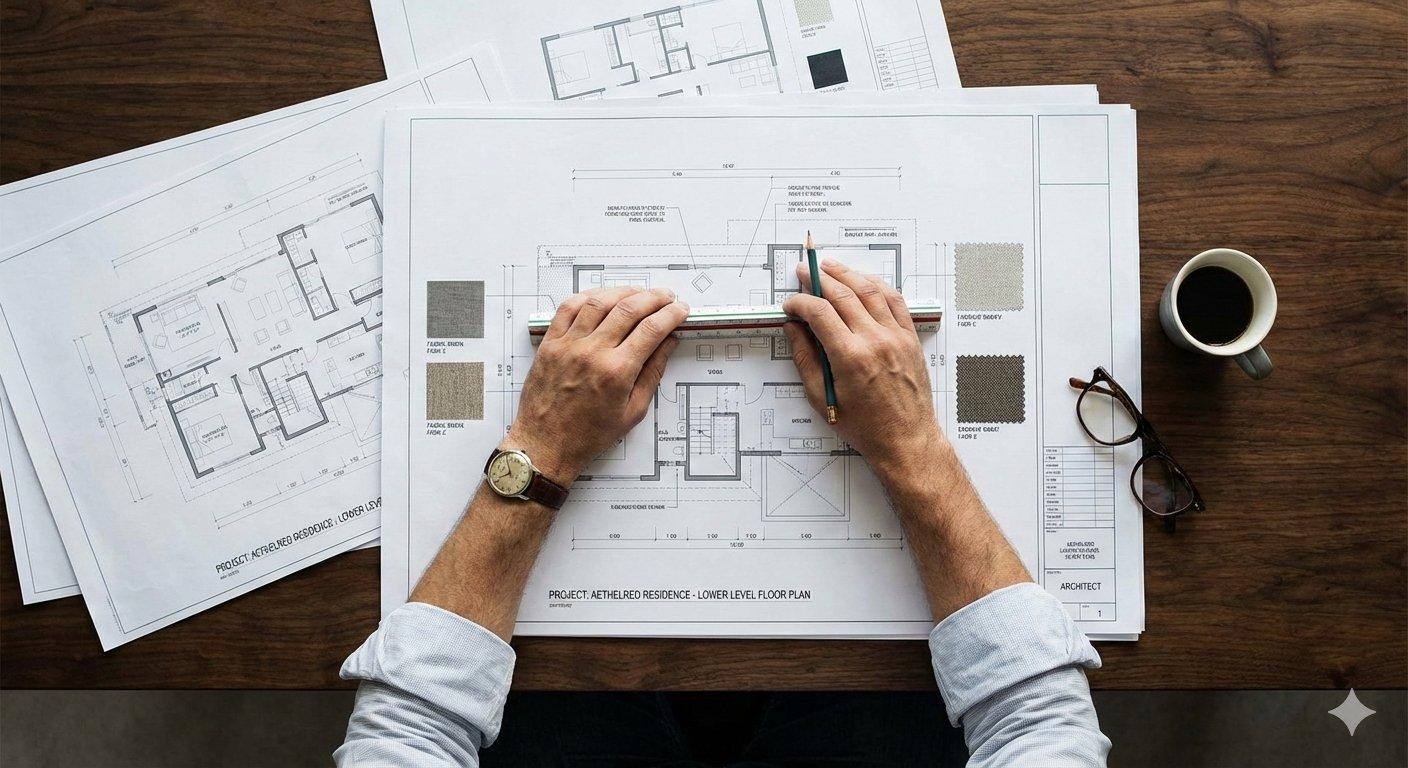
The main piece of paper you’re after is a Demolition Permit, sometimes called a Demolition Approval or DA. This is the official green light from your council, confirming your plans meet all the local safety, environmental, and planning rules.
The application itself usually needs a stack of supporting documents. While your demolition contractor will typically handle the legwork, it’s smart to know exactly what’s involved.
It's a common mistake to think getting a demolition permit is a quick formality. Depending on your council and how complex your site is, approval can take anywhere from a few weeks to several months. You absolutely have to factor this into your project timeline.
Checking for Potential Roadblocks
Not every block of land is a blank slate. Councils use special planning controls, known as overlays, to protect the specific character of an area, and these can put serious restrictions on what you can and can’t do.
Getting your head around these complexities early on is key. For a deeper dive, understanding the critical role of architects in navigating regulations and permits can offer some real insight. Being prepared from day one helps you avoid costly surprises and ensures your project gets off on the right foot.
How to Get Accurate and Trustworthy Demolition Quotes
Picking the right contractor from the dozens of demolition companies on the market is one of the biggest calls you will make in your knock-down rebuild. The right crew sets your architectural project up for a smooth, safe, and on-budget start. The wrong one? That path can be full of costly delays and nasty surprises. The key to telling them apart is getting accurate, trustworthy quotes from the get-go.
Think of it like you're hiring for a critical role, because you are. You wouldn't take someone on without checking their experience and asking some tough questions, and the same applies here. A professional quote is much more than just a number; it’s a direct reflection of a contractor’s thoroughness, experience, and transparency.
Preparing for Your Quote Requests
A little prep work before you even pick up the phone makes a huge difference. When you give contractors clear, detailed information upfront, they can give you a precise quote. This makes comparing your options much easier and is essential to understanding the real cost to demolish a house.
Try to have these documents ready to go:
- Property Plans: Site surveys or architectural drawings give contractors the exact dimensions and layout they need to work from.
- Asbestos Report: For older homes, this is non-negotiable. A professional assessment showing the location and amount of any asbestos is a must-have.
- Council Information: Any details you have about known overlays will help them understand what they're up against.
Identifying Reputable Contractors
With your documents sorted, it's time to find the right people to send them to. Your first check should always be for a full license and insurance, this is your main safeguard. A true professional will have zero issues providing proof of their credentials.
Make sure you ask any potential contractor these key questions:
- Can you provide a copy of your demolition licence and public liability insurance? This needs to cover at least $20 million.
- How many similar projects have you completed in this area? There's no substitute for local experience.
- Will you be handling the council permit application process? A full-service contractor often manages this headache for you.
- What is your process for managing hazardous materials like asbestos? They need to have a clear, compliant plan.
A vague or evasive answer to any of these questions is a major red flag. True professionals are transparent about their processes, credentials, and how they handle safety and compliance.
What a Good Quote Should Include
When the quotes start rolling in, you need to know what you’re looking at. A trustworthy quote is detailed and itemised, leaving no room for confusion. It should break down every single cost so you can see exactly where your money is going.
A quality quote will always specify:
- Scope of Work: A clear description of all tasks, from setting up the site to the final clean-up.
- Inclusions: Itemised costs for permits, labour, machinery, waste disposal, and asbestos removal.
- Exclusions: A list of what is not covered, like soil testing or extensive tree removal.
- Timeline: An estimated start and completion date for the demolition.
- Payment Schedule: A clear breakdown of the deposit, progress payments, and the final balance.
When you have detailed, itemised quotes, you can make a true "apples-with-apples" comparison. It protects you from surprise costs and lets you sign a contract with confidence, knowing you've picked the best team for the job.
A Few Common Demolition Questions
It’s completely normal to have a lot of questions when you’re thinking about demolition. We get it. Here are some quick, straightforward answers to the queries we hear most often from homeowners planning a knock-down rebuild.
How Long Does a House Demolition Actually Take?
The physical act of knocking down a standard single-storey house is surprisingly quick, often just two to five days once the machinery is on-site.
But that’s only one piece of the puzzle. The entire process, from signing the contract to having a cleared block, is much longer. You’ll need to factor in time for:
- Permit Approvals: This is the big variable. Depending on your local council, getting the green light can take anywhere from a few weeks to a couple of months.
- Utility Disconnections: Organising the final meter readings and disconnections for gas, electricity, and water can easily take another two to four weeks.
- Asbestos Removal: If your home contains asbestos, licensed specialists must carefully remove and dispose of it before any heavy machinery can start. This adds several days of meticulous work to the front end of the timeline.
Do I Need to Tell My Neighbours?
Absolutely. While it might not be a legal requirement in your area, it’s just good form and a simple courtesy that keeps the peace. Your demolition contractor will have a schedule, but a personal heads-up from you about the noise, dust, and trucks on the street goes a long way. A little goodwill can make the whole process smoother for everyone.
Giving your neighbours a clear timeline of the project and potential disruptions is one of the smartest, simplest things you can do. It keeps everyone on good terms and avoids unnecessary friction.
Can I Salvage Materials from My Old House?
Yes, and it’s a great way to save a bit of money and keep beautiful materials out of landfill. Things like hardwood floorboards, vintage doors, classic windows, or unique light fittings can often be carefully removed before the main demolition starts.
You’ll need to discuss this with your contractor right at the beginning, as they’ll need to build this "deconstruction" phase into their quote and schedule. Some demolition companies even specialise in salvaging and can handle this for you.
Ready to start planning your knock-down rebuild? Invilla Architecture guides homeowners through every stage, from feasibility to final construction, ensuring early decision like demolition support the long-term success of your home.