

A knock down rebuild is simple in principle. You demolish the house that is there and build a new one on the same block.
What trips people up is the sequence. Run the stages in order and the project is predictable. Run them out of order and you pay for it twice, once in design fees for work that has to be redone, and again in the approval queue you re-enter.
This guide walks through all nine stages in the order they actually happen, with the Queensland approval pathway set out properly, because that is the part most national guides get wrong.
What is the knock down rebuild process?
The knock down rebuild process is the full sequence of stages involved in demolishing an existing house and building a new home on the same block: site assessment, council and overlay checks, budgeting, architectural design, planning approval, builder selection, demolition, construction, and handover. Each stage feeds the next, so the early due diligence work determines how smoothly the design, approval, and build stages run later.
How long does the knock down rebuild process take?
Most knock down rebuilds run 12 to 18 months from the start of design to handover. Add 3 to 6 months on top where the block needs a Development Application, because council assessment sits outside your control.
Within that, on-site construction takes 8 to 12 months. The rest is design, engineering, documentation and approvals.
The single biggest variable is which approval pathway your block sits on. That is decided by your zoning and overlays, not by your design, which is why Step 2 comes so early.
Why choose a knock down rebuild at all?
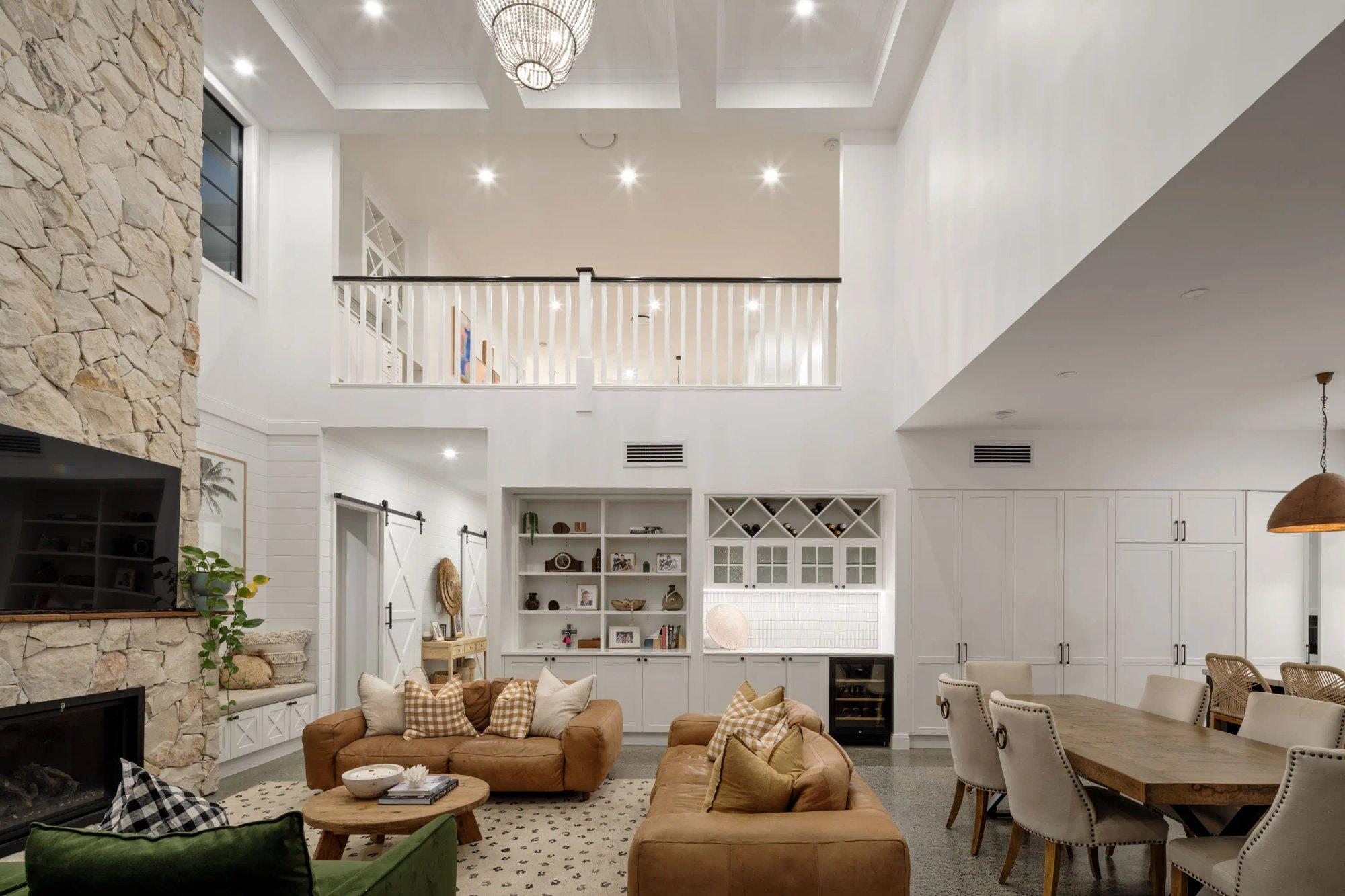
The practical upside is continuity. You keep the school catchment, the commute, the neighbours and the routines, and you get the house you actually need on the block you already own. It also removes the unknowns. On a rebuild you are working from a surveyed block rather than an existing structure, so what you draw is what gets built.
- Tailored layouts: A floor plan that responds directly to how your family moves, whether that looks like an open-plan entertaining pavilion, a quiet home office wing, or multi-generational living zones.
- Modern building standards: New homes are built to current energy-efficiency regulations, which lowers your cooling and heating bills from day one.
- Future-proof infrastructure: Smart home automation, sustainable materials, and accessibility elements are built into the foundations rather than added later.
Knock down rebuilds are now a significant share of new housing. Australian Bureau of Statistics analysis of approvals between July 2019 and June 2025 found that 19.2% of all new residential dwellings approved nationally were built on a site where a demolition had been approved in the preceding three years, including 34,030 rebuild approvals in Queensland.
The knock down rebuild process, step by step
Here is the full sequence in the order it happens. Each stage below opens with the short version, then the detail you need to act on it.
Step 1: Commission a professional site assessment
Start with access. How will a demolition truck and a concrete pump physically reach the block? Narrow inner-city streets and steep driveways add cost before anything is built, purely in handling.
Then look at what is under the grass. A soil test is not optional. The geotechnical report classifies your soil, and on Brisbane's reactive clay that classification drives the slab engineering more than any other single input. The same investigation flags buried services and contamination that would otherwise surface mid-demolition.
Step 2: Check your zoning and council overlays
Local planning rules dictate what is physically permissible on your block. Checking them before you commit to a design concept prevents wasted design fees.
Start by examining your property's zoning codes. This framework regulates building heights, site coverage ratios, and boundary setback requirements. Then check for specific property overlays. Overlays are where the constraints usually sit.
- Character and heritage overlays: Designed to protect traditional streetscapes, these can dictate your external materials, window styles, and roof pitches.
- Flood and bushfire overlays: In Brisbane, flood is the more common of the two. It sets minimum habitable floor levels, which can change your whole ground-floor strategy. Bushfire overlays trigger a Bushfire Attack Level assessment and construction requirements to match.
- Vegetation protection orders: Rules that protect significant trees on or near your boundary, directly impacting your building footprint.
Step 3: Build an all-inclusive project budget
Your budget must account for the entire project lifecycle, not just the builder's final construction quote. The most common pitfall is ignoring the soft costs and external finishes that sit outside the core building contract.
Your complete budget mapping should cover:
- Pre-construction fees: Architects, engineers, land surveyors, soil testers, and council application lodgements.
- Demolition and clearing: Safely flattening the structure, removing hazardous materials, and levelling the pad.
- The building contract: The core structural labour and material costs to build the lock-up shell and interiors.
- External works: Landscaping, driveways, boundary fencing, retaining walls, and pools.
Set aside a contingency of 10 to 20 percent outside the building contract. Spent, it absorbs the surprise. Unspent, it comes back to you.
The most frequent budget surprises occur outside the core building contract: unexpected underground rock shelves during excavation, upgraded electrical service connections from the street, and finishing costs like custom retaining walls, turf, and window coverings. For local figures, start with our guide to knock down rebuild costs in Brisbane, then pressure-test your own numbers with our knock down rebuild cost calculator guide, which breaks down how fees distribute across demolition and structural framing.
Step 4: Assemble your design team and develop the design
Choosing the right professional to design your home is one of the most significant decisions you will make. Each option brings a different style, service level, and cost structure to the table.
Design capability varies a lot across the market, and so does what happens after the drawings are done. The question worth asking any designer is not what they charge for documentation, but who administers the building contract and who is on site when a variation comes up. On a rebuild, that is where money is won or lost.
On complex, sloping or overlay-affected blocks, that oversight matters more than on a flat, unconstrained site. You can see how we structure this stage in our architectural design service.
Whoever you select, expertise in navigating local council frameworks is mandatory. From there, the design itself moves through four distinct, methodical phases:
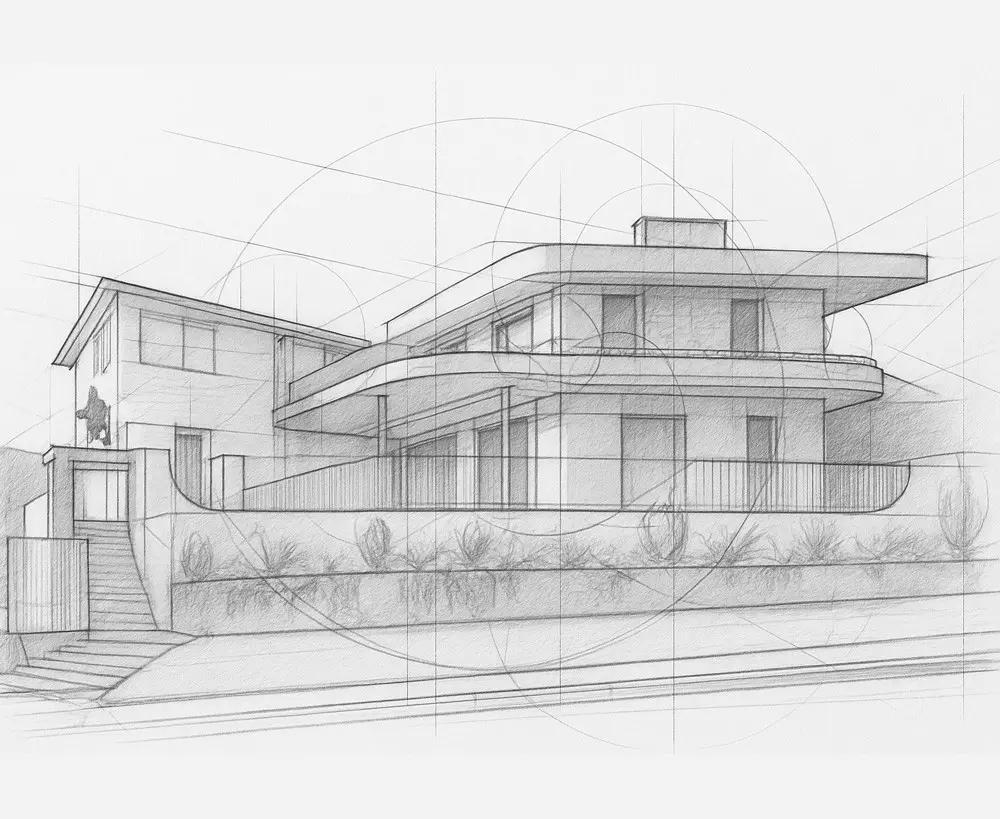
- Concept design: You map out basic floor plan flows, solar orientation, and how the home sits on the land.
- Design development: Refining the architectural shapes, selecting key external materials, and integrating early structural engineering input.
- Planning submission: Preparing the exact architectural packages required for your approval pathway.
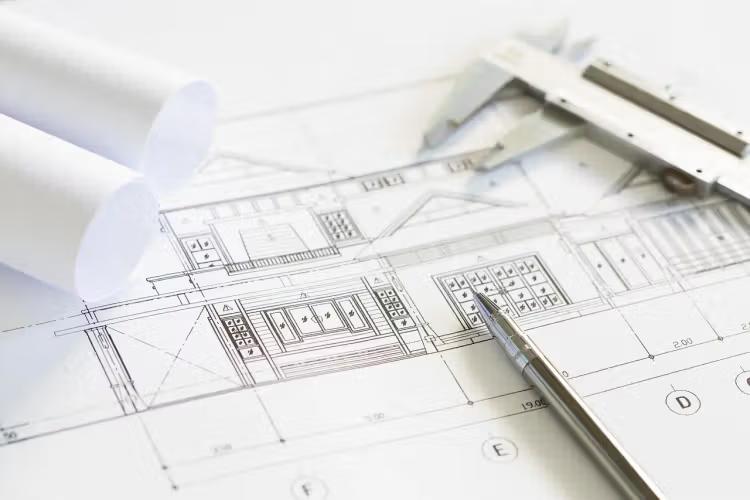
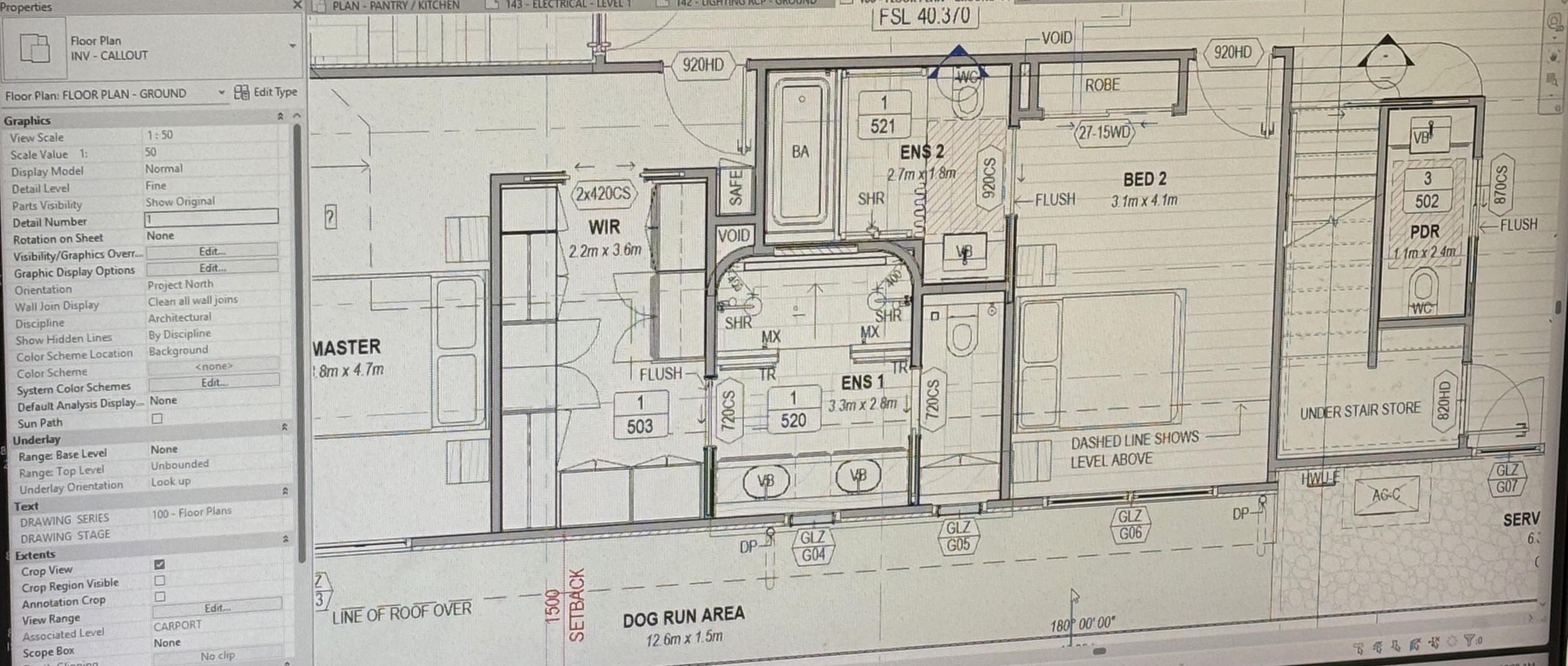
- Construction documentation: Every window specification, electrical layout, cabinetry detail, and junction is drawn and noted, allowing builders to price your home with absolute accuracy.
Step 5: Secure your approvals
A knock down rebuild in Queensland needs a demolition approval and a building approval. Some blocks also need a development approval from council first, and which of those applies is what sets your timeline.
- Accepted development. If your design meets every requirement of the planning scheme for your zone, including setbacks, height, site cover and any overlay codes, you do not lodge a planning application at all. You go straight to a private building certifier. This is the faster path and it is the one most straightforward blocks sit on.
- Assessable development. If your block carries a character, heritage, flood or vegetation overlay, or your design seeks a variation to the scheme, you need a Development Application assessed by Brisbane City Council before a building approval can be issued. Assessment takes months rather than weeks, and where the application is impact assessable it includes a public notification period.
Either way, the building approval itself is issued by a private building certifier licensed by the Queensland Building and Construction Commission, not by council. The certifier assesses the drawings against the National Construction Code and Queensland standards, carries out the mandatory inspections, and issues the certificate of occupancy at the end.
Approval pathways differ between states, so a national guide will not tell you which one applies to your block. In Queensland the answer comes from your planning scheme and your overlays, which is why Step 2 sits where it does.
Step 6: Choose your builder and execute contracts
With approved plans and complete construction documentation, builders can price your home accurately and you can compare quotes on equal footing.
Volume builders work from an established range of plans, which makes pricing predictable and the process familiar. A custom builder prices a one-off design, which suits a block with slope, a difficult aspect or an overlay shaping the envelope.
Which suits you follows from your block and your brief, and by this stage you have both documented, so you can ask either type to price the same scope.
Step 7: Demolition and site clearing
Demolition is a controlled sequence. Utilities are isolated, hazardous materials are removed under licence, the structure comes down and the block is cleared to an engineered pad.
This stage carries its own line in your budget, and it varies with access, materials, and what the assessments in Step 1 uncovered. Before you lock in a demolition quote, it is worth understanding how much it costs to demolish a house in Australia so you can spot an outlier quote in either direction. Remember that once demolition begins, you cannot remain on the property, so your temporary housing needs to be sorted before the machinery arrives.
Step 8: Construction, from slab to practical completion
The on-site build usually takes 8 to 12 months and moves through five major milestones. Your builder guides the schedule, but these are the stages you will witness on site:
- The slab: Inground plumbing lines are trenched, steel reinforcement is laid, and the concrete slab foundation is poured.
- The frame: The timber or steel wall studs and roof trusses go up. For the first time, you can physically walk through your future rooms.
- Lock-up: The building envelope is made completely weatherproof. Roof sheeting, external wall cladding, windows, and external doors are fully installed.
- Fixing and fit-out: The interior takes shape. Insulation and plasterboard line the walls, followed by custom cabinetry, internal doors, architraves, and wet area waterproofing.
- Practical completion: The final detailing phase. Painting, flooring, light fittings, appliances, and landscaping are wrapped up.
While your builder handles the daily trades, your role as the client remains vital. Establish a regular, structured site meeting schedule with your project manager, and always follow up phone decisions with a brief summary email so every variation is documented in writing. Coordinate every site visit through your builder. Active sites carry safety and insurance obligations that cover who is on them and when.
Step 9: Handover, inspection, and the defects liability period
The project closes with a formal inspection, key handover, and a legal safety net that covers you after you move in.
At the Practical Completion Inspection (PCI), you complete a comprehensive, room-by-room walkthrough with your builder to identify minor cosmetic defects or outstanding items. Test every window handle, inspect paint finishes under natural light, and check all plumbing fixtures. Your builder documents these on a defects list and rectifies them before final settlement. At handover, you receive your keys, certificates of occupancy, and appliance warranties. Then your Defects Liability Period begins: the period during which the builder is obliged to return and repair any minor settling adjustments or cracks that appear as the building handles its first seasonal shifts.
Your pre-start knock down rebuild checklist
Before you engage anyone, work through this list. Every item maps to a stage above, and each one you complete early removes a delay later:
- Order a soil test and geotechnical report for your block.
- Confirm site access for demolition trucks and concrete pumps, especially on narrow or steep streets.
- Check your zoning codes: building height, site coverage, and boundary setbacks.
- Search for character, heritage, bushfire, flood, and vegetation overlays on your property.
- Map your full budget across pre-construction fees, demolition, the building contract, and external works.
- Set aside a contingency of at 10 to 20 percent outside the building contract.
- Decide whether an architect, building designer, or draftsperson suits your project's complexity.
- Plan your temporary housing and storage for the full construction period.
Rebuild or renovate?
Both work, and which one suits comes down to how much of the existing structure your design needs to keep. Our knock down rebuild versus renovation guide works through that decision properly, including the cases where renovating is clearly the better call.
Can you live on site during a knock down rebuild?
No. Once demolition begins, the property is legally classified as a commercial construction zone, and for safety, liability, and insurance reasons no residents can remain on site. You must factor the cost of renting local temporary housing into your budget calculations from the very start, along with storage for your belongings during the transition. Treat it as a fixed project cost, not an afterthought.
Where to start
The stages above run in order for a reason, and the first two cost the least and change the most. A soil test and an overlay check on your block will tell you which approval pathway you are on and roughly what your slab will cost, before you have committed to a design.
If you want a sense of the numbers first, the estimator returns a quote range drawn from the homes we have designed and documented.