

The best Queenslander renovations share one quality: from the street, you would barely know anything happened. The character front is restored, the picket fence and the timber details are intact. Then you step inside, and the house opens into light, volume and a connection to the garden the original never had. That contrast, heritage kept out front and modern life unlocked behind, is what separates a home that has merely been renewed from one that has been genuinely transformed.
This page collects real before-and-after Queenslander renovations from our Brisbane studio, along with the specific decisions behind each one. A good modern Queenslander renovation is never just new finishes over old bones. It is a series of deliberate calls about light, levels, structure and how the house meets the street. Here is what actually moved the needle on three of our projects, so you can see past the finished photos to the thinking underneath.
I'm Joe Verrills, managing director at Invilla. I work with our clients from the first sketch through to the finished home, so for each project below I have set out not just what changed, but why we made the call we did.
Project 1 Lenore House, Hawthorne
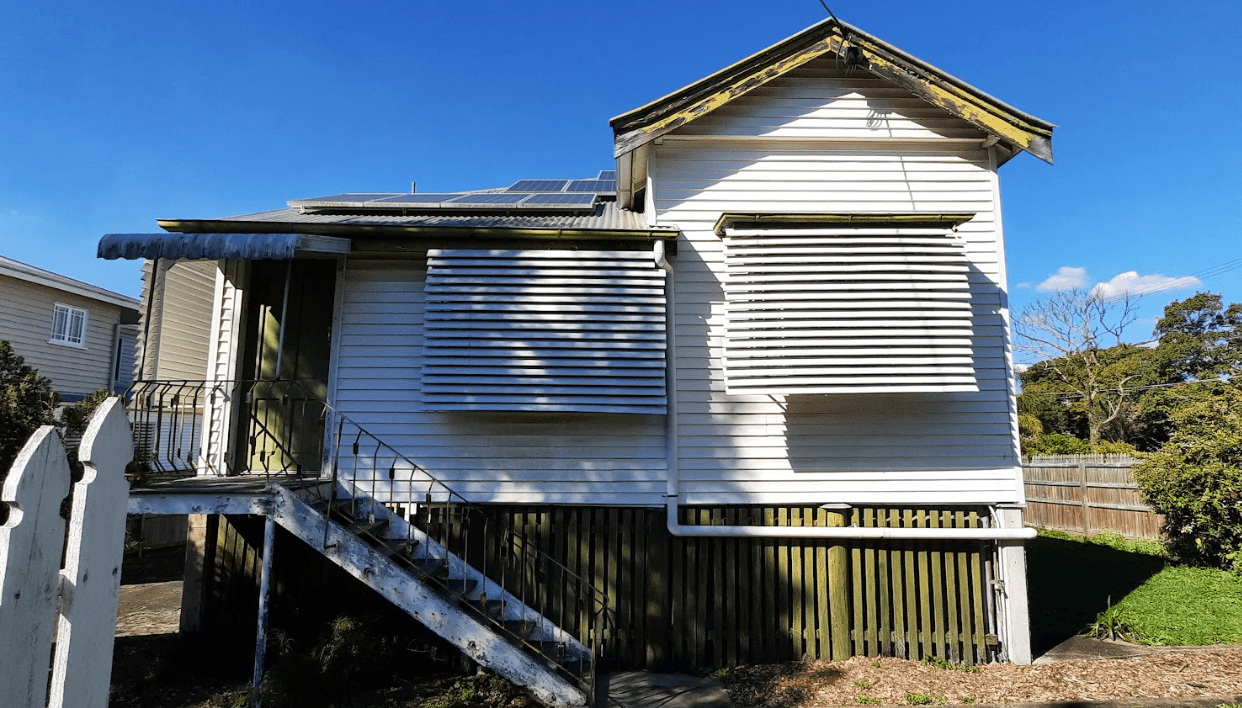
Before. Lenore House began as a pre-war home on a Hawthorne character street that had, over the years, been carved into a duplex and patched with a run of ad-hoc, handyman-grade changes. It sat dark, cold and unwelcoming, and before a single new line could be drawn it needed real work, structural repair and basic make-good just to reach a sound starting point. What it did have was good bones: the form of a classic, cottage-scale Queenslander, high ceilings, and genuine potential hiding under the neglect.
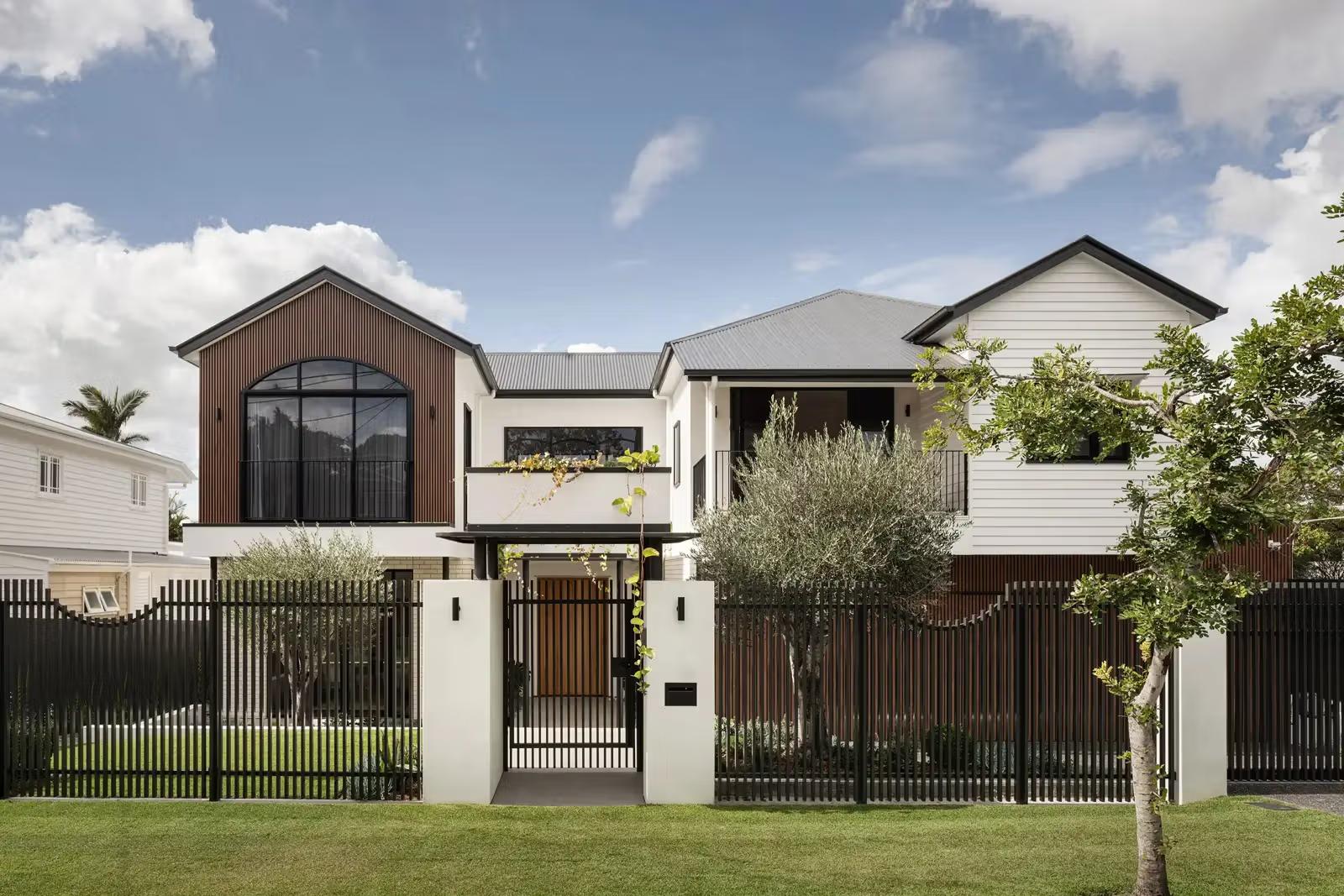
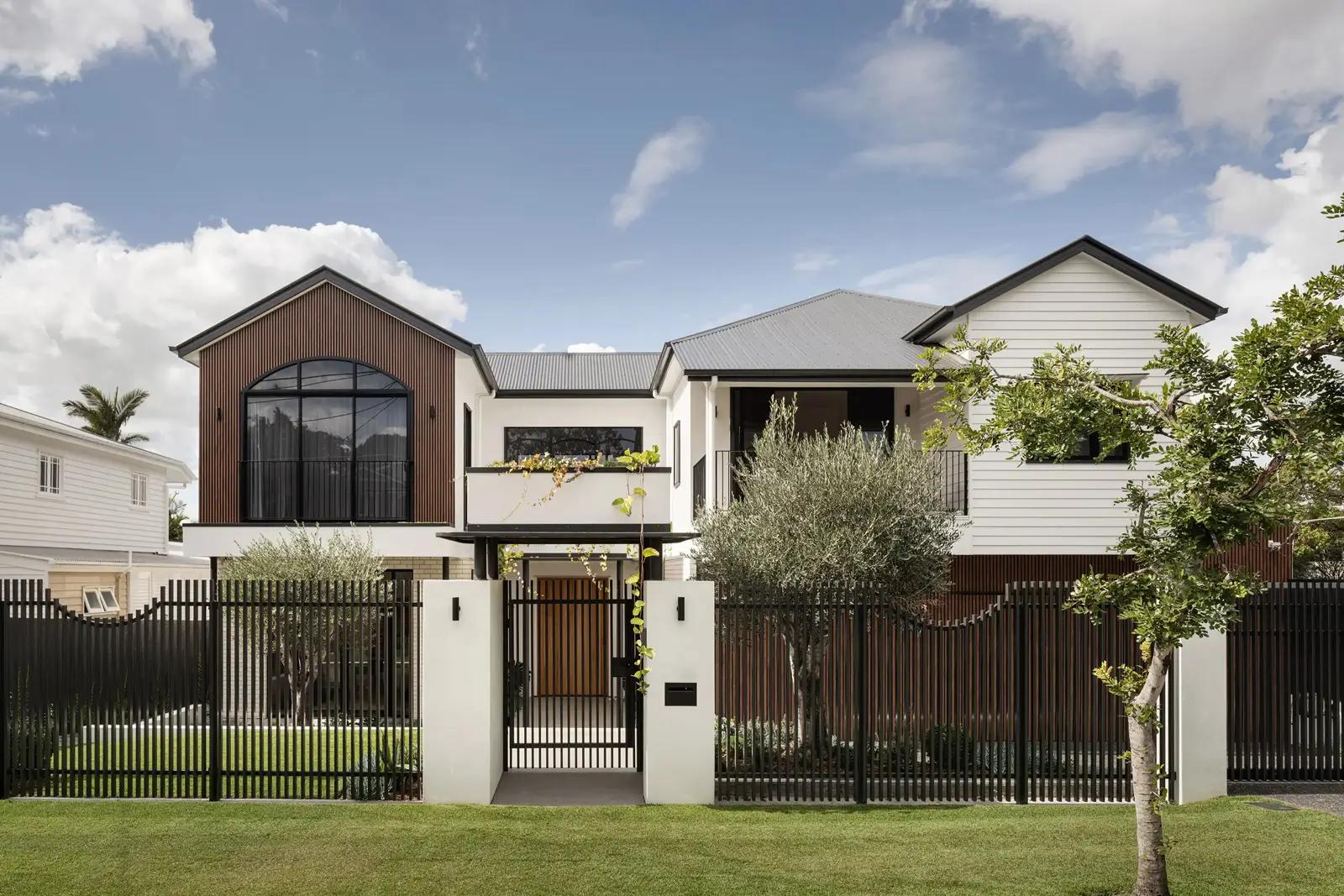
After. The front was restored, and the rear reimagined into a luxurious five-bedroom, four-bathroom family home. A curved, double-height bridging element now forms a grand entry and stitches the original house to a new wing. That wing wears a pitched gable to answer the old roofline, while a sleek flat-black entry roof sets up a deliberate, modern contrast. Inside, curved walls finished in Venetian plaster trade light around the rooms, and a voided staircase pulls sun deep into the plan. Outdoors, a year-round poolside zone with a built-in kitchen pushes the living right out to the garden. The result was nominated for Master Builders Best Renovation and Best Kitchen/Bathroom in 2023.
The decision that mattered. Raising the house and building in underneath. With a growing family, the brief was for more room without surrendering the backyard, and a home that felt private yet open, light and generous, spacious yet still intimate. Lifting the original and forming a new lower level is what made all of that achievable on the one block.
See more: the Lenore House project gallery
Project 2 Real House, Norman Park
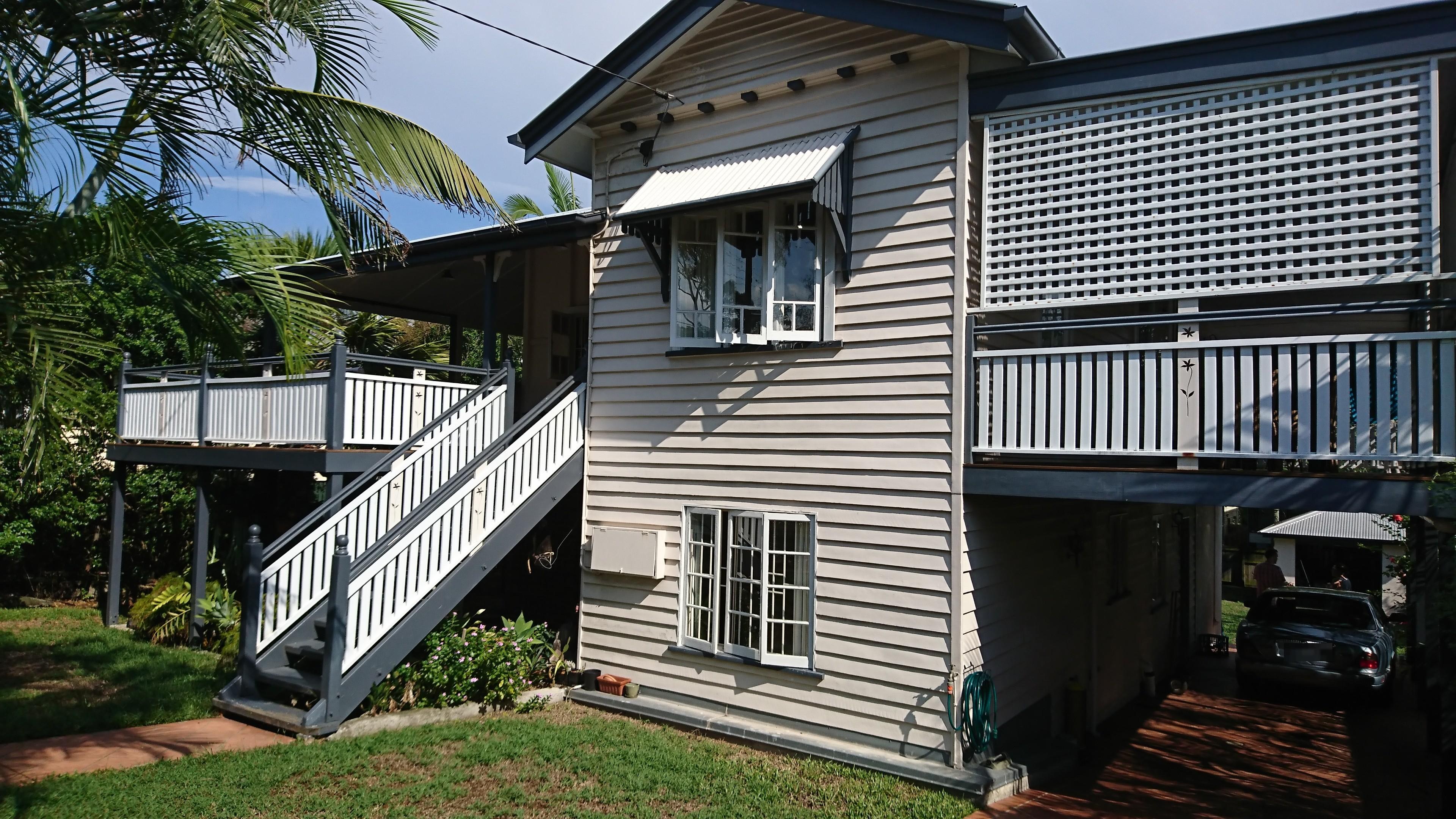
Before. A young family who had renovated once before in the same suburb brought us a challenging, sloping Norman Park site and a dilapidated pre-war house on top of it. Earlier, poorly handled renovations had left it with disjointed floor levels and ceiling heights that never quite agreed with one another. Underneath, though, were solid pre-war bones worth saving.
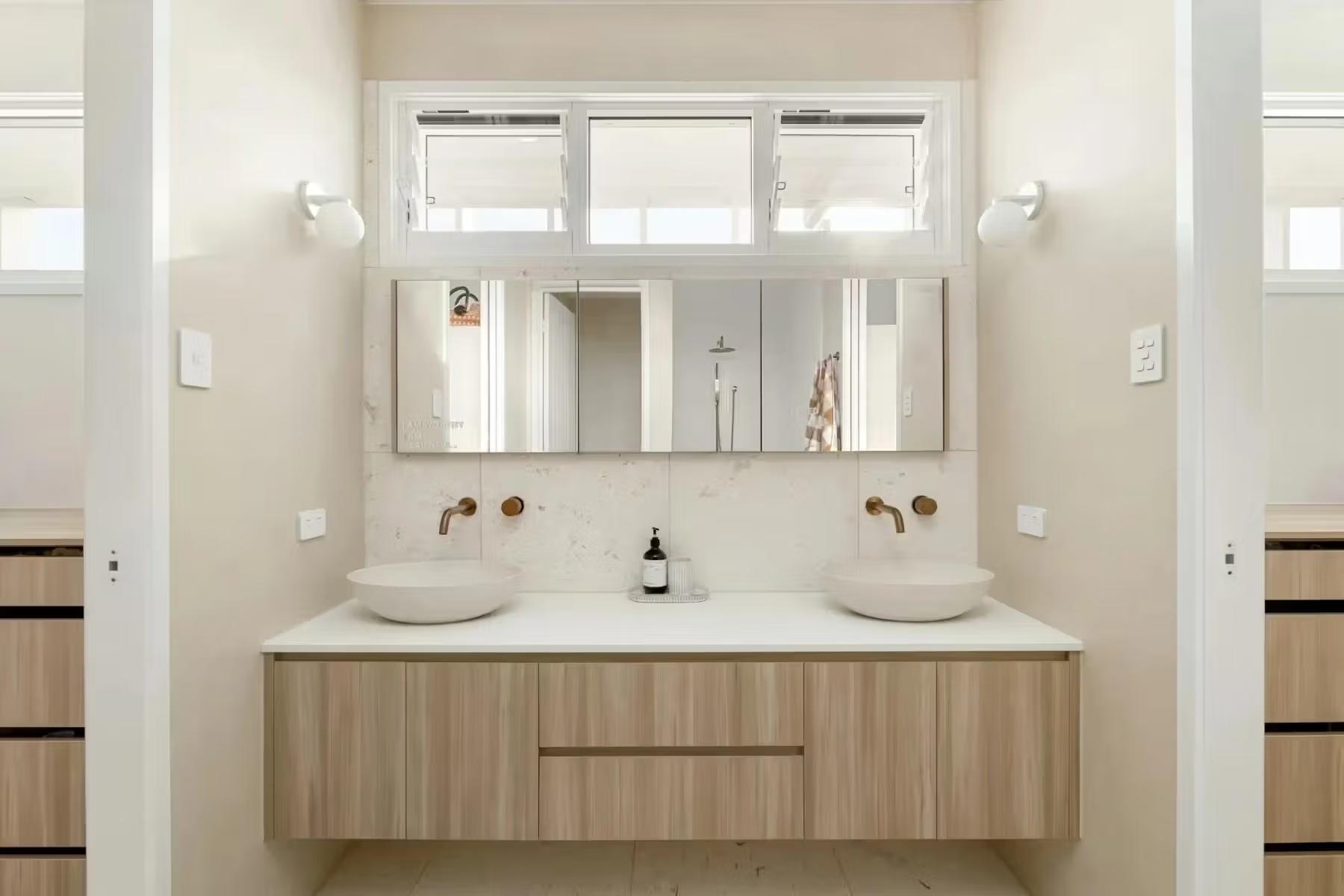
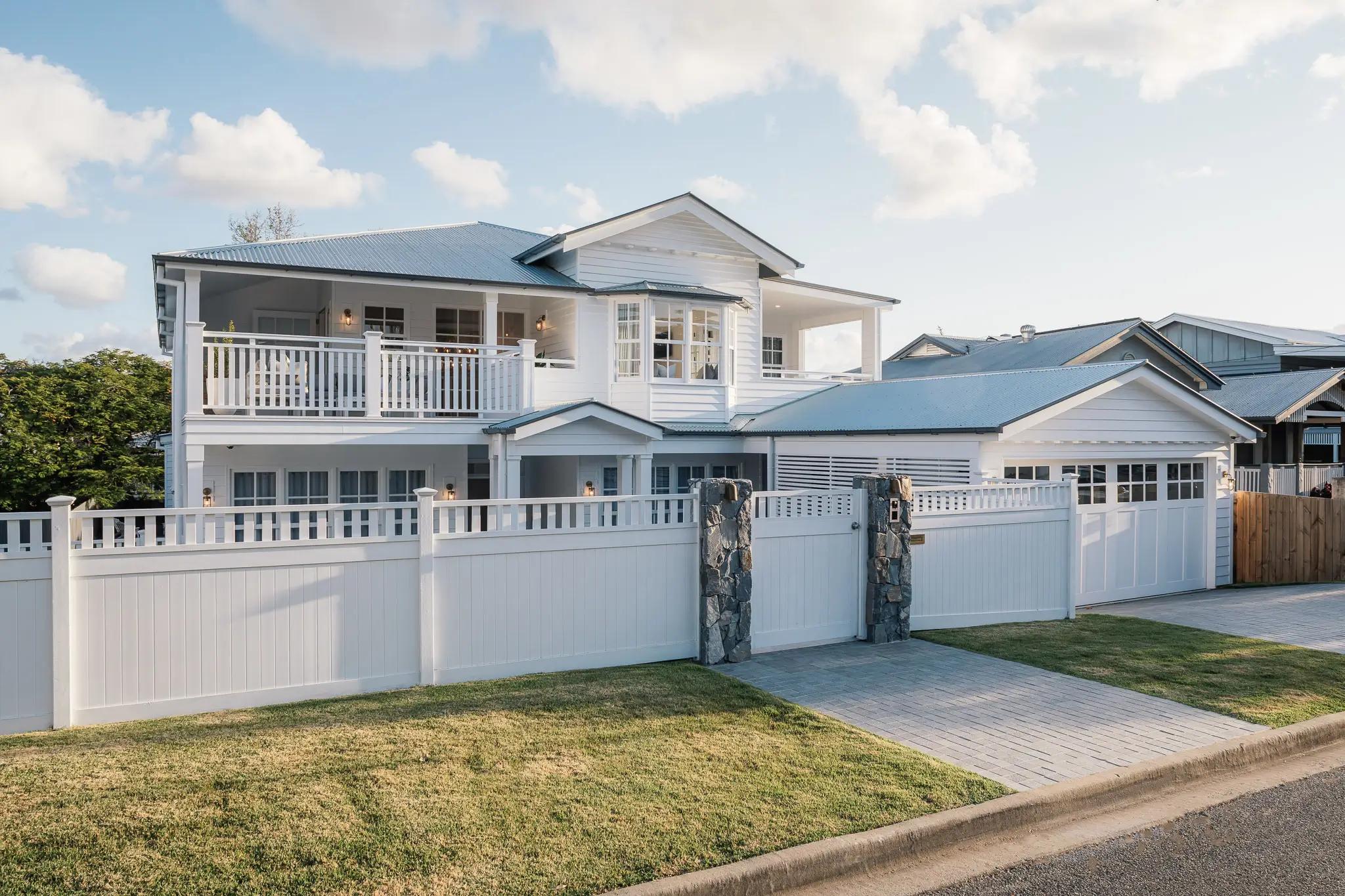
After. We raised the original house to work with the slope, and completely reimagined the internal layout to chase the north-north-east aspect and the views. The new plan runs open through living, dining and kitchen, lifted by coffered ceilings and a high void around the staircase, and finished in natural materials: timber floors, custom wainscoting, double-hung windows, marble and gold fixtures. Expansive sliding doors open the living right onto a large deck and the backyard, while the upper level gained a private master suite with its own deck and window seat. To make the most of the sloping block, we levelled a generous alfresco area for a family pool and turned an existing backyard shed into a dedicated pool house. The home was later featured in Queensland Homes.
The decision that mattered. Raising the house to tame the slope and capture the aspect. Almost everything good about the finished home, the light, the views, the indoor-outdoor flow, follows from lifting the original to suit the block rather than fighting it.
See more: the Real Avenue project gallery. The home was later featured in Queensland Homes magazine.
Project 3 Ormond House, Ascot
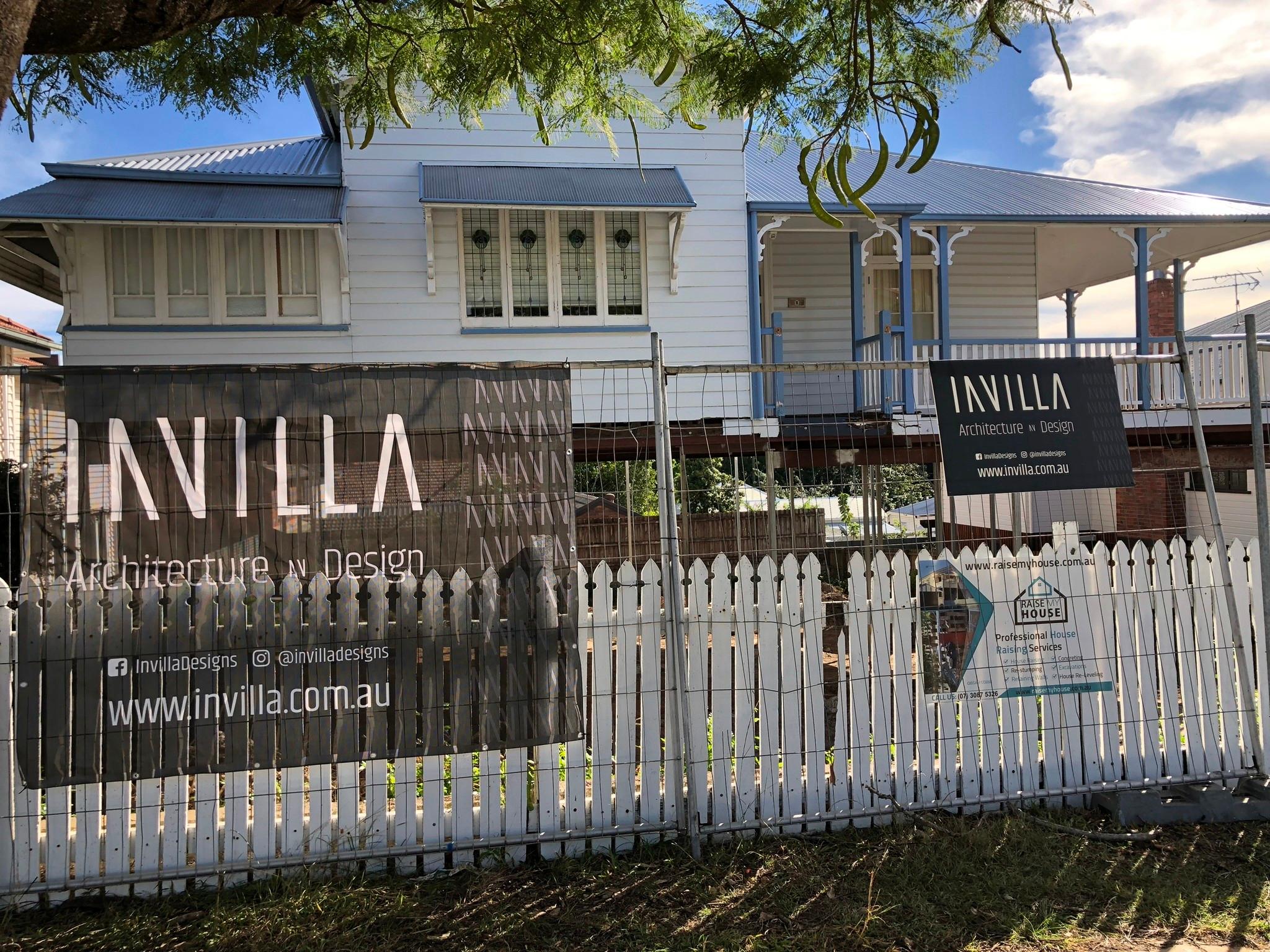
Before. A textbook pre-war Ascot Queenslander, painted pale blue right down to the matching balustrades, gutters and trim. A string of small, disconnected renovations over the years had left it with mismatched proportions and rooms that did not talk to one another. The owners, juggling young children and demanding careers, wanted a turnkey result and the confidence to hand the complexity to us.
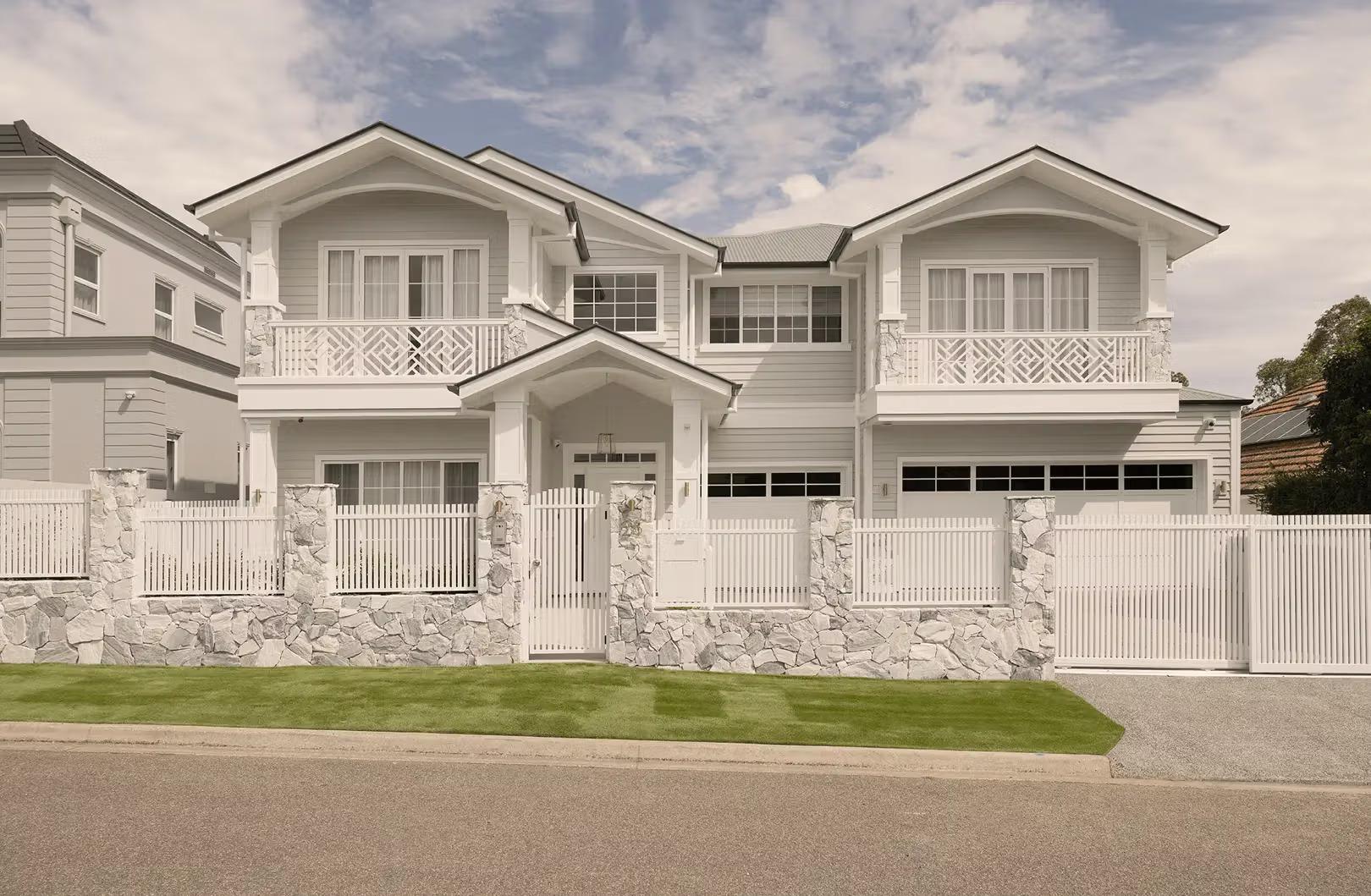
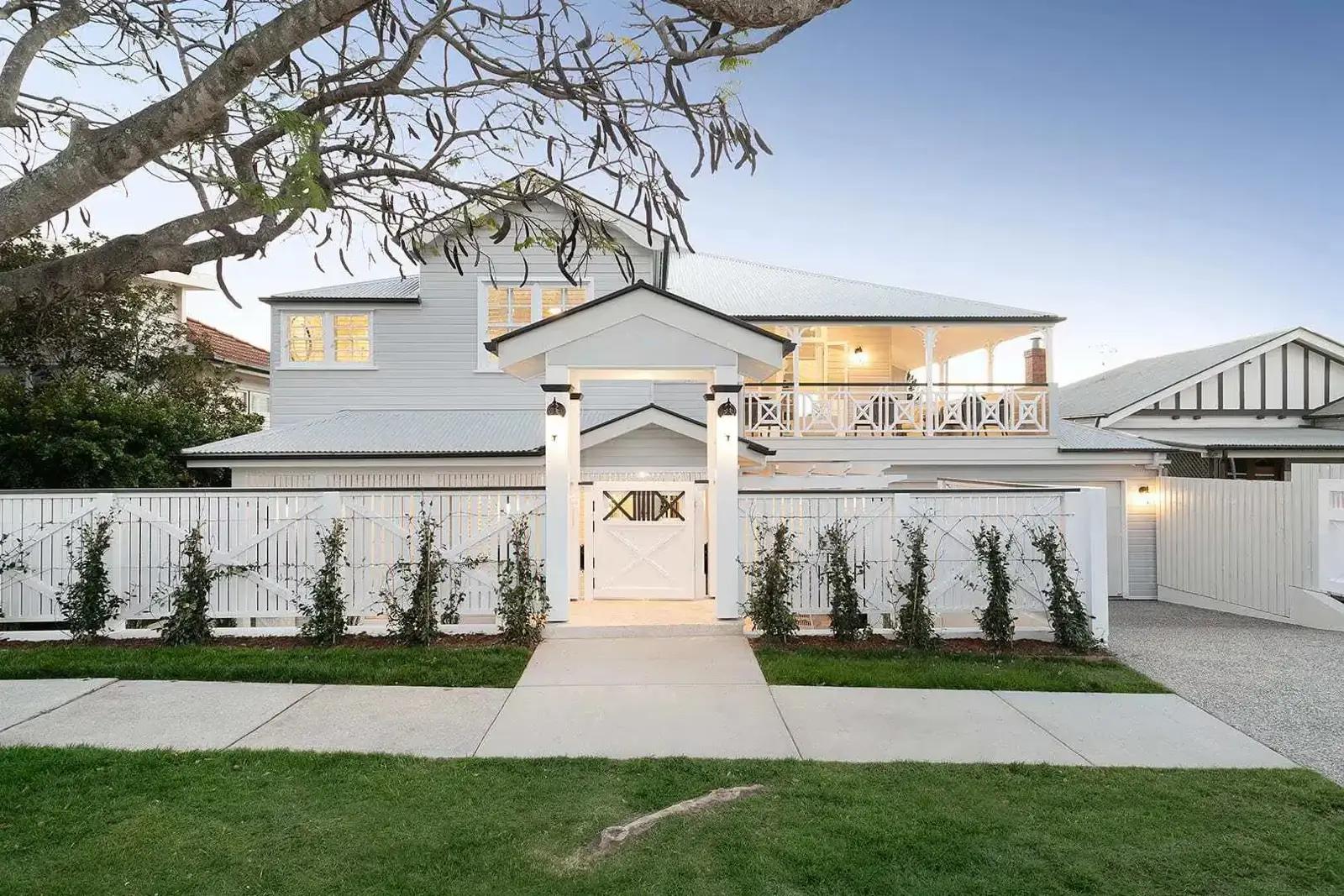
After. Our approach centred on lifting the existing home and building in underneath, creating a brand-new, level ground floor that connects straight out to the lawn and pool. We started with hand-sketched concepts, then moved into 3D modelling so the clients could walk the layout in real time before anything was built. The original upper level keeps and sharpens its character, while the new lower level carries the modern living. A double-height void draws light deep into the home, and the detailing runs to a bespoke walk-in wardrobe and a sculptural wine cellar carved in beneath the stair. This one, too, was featured in Queensland Homes.
The decision that mattered. Lifting and building in underneath. It was the move that bought the family a whole new floor of living without giving up the backyard, the recurring theme across all three of these homes.
See more: the Ormond Street project gallery. This one was also featured in Queensland Homes magazine.
What these Queenslander renovations involved
Strip away the finishes and the same structural pattern sits underneath all three transformations. None of it is accidental: each move answers a problem the original house posed, and together they explain why the after photos look the way they do.
Raise and build under
Every project above involved lifting the original house and building a new level of living beneath it. At Lenore House, the lift bought a growing family real room without surrendering the backyard. At Real Avenue, raising the house tamed a difficult sloping block and captured the north-north-east aspect and the views. At Ormond Street, it created a brand-new, level ground floor that connects straight out to the lawn and pool. It is the recurring big move across our best work, and if your block and brief point the same way, our guide to raising a Queenslander and building underneath goes deep on how it works.
Keep the front, extend and rework the rear
In each case the character frontage was restored while the design energy went in behind it. Lenore House gained an entire new rear wing, stitched to the original by a curved, double-height entry, with a pitched gable answering the old roofline and a flat-black entry roof setting up a deliberate modern contrast. The front earns the home its place in the street; the back earns its place in your life.
Reconfigure the plan around light
All three originals suffered the same complaints: dark rooms, disjointed floor levels and spaces that did not talk to one another. And all three finished plans solve it the same way. Living, dining and kitchen run open to each other, voids pull sun deep into the house (a voided staircase at Lenore House, a high stair void at Real Avenue, a double-height void at Ormond Street), and generous openings connect the living straight out to deck, lawn and pool.
None of these moves fight what a Queenslander is; they work because of it. High ceilings, an honest timber structure and a house that can physically be lifted are exactly what make this kind of transformation possible. For the background on the original forms these projects started from, read our post on Queenslander house styles.
Want the step-by-step? Read the guide
This post is deliberately about results, not process. If you are at the planning stage and want the full walkthrough of site assessments, character overlays, approvals, structural upgrades and budgeting, our guide to renovating a Queenslander covers all of it in one place. Consider this page the why, and that one the how.
Working with renovation architects in Brisbane
Every home above followed the same arc: a family with a compromised original house, a clear brief, and the decision to hand the complexity to a studio that transforms these homes for a living. At Ormond Street, that meant hand-sketched concepts first, then a 3D model the clients could walk through in real time before anything was built. At Lenore House, it meant an honest reckoning with structural repair and make-good before a single new line was drawn. That is the working relationship a good architect brings to a project like this: the judgement to know which moves will transform your particular house, and the process to carry them from sketch to finished home.
If you are weighing up who to engage, our post on choosing renovation architects in Brisbane covers what to look for, and our services page shows how we run projects from the first conversation through to handover.
See what your Queenslander could become
If one of these before-and-afters looks like your home's potential, the next step is a proper look at your specific house and block. Start your project with our Quote Estimator and we will show you what's realistic.